-

·
What Are the UN 38.3 Transportation Testing Requirements for Lithium-Ion Batteries?
Article Summary UN 38.3 is the testing framework that determines whether a lithium-ion battery is safe to transport under global shipping regulations, and this article breaks down exactly what it covers. It walks through the eight current core tests (T1–T8): altitude simulation (validating performance in low-pressure air transport environments), thermal cycling (confirming stability across extreme…
-

·
Countdown to “Safely Charging Ahead” Symposium: Americase Releases Full Agenda Featuring Live Battery Safety Demonstrations, Regulatory Insights, and Industry Leader Panel Discussions
Registration is still open for symposium in Waxahachie, TX, Oct 27-28 Waxahachie, TX October 9, 2025 — With just weeks to go before one of the battery industry’s most anticipated safety events, Americase has released the full agenda for its upcoming “Safely Charging Ahead: Navigating Battery Safety, Regulations & Innovation Symposium,” taking place October 27–28,…
-

·
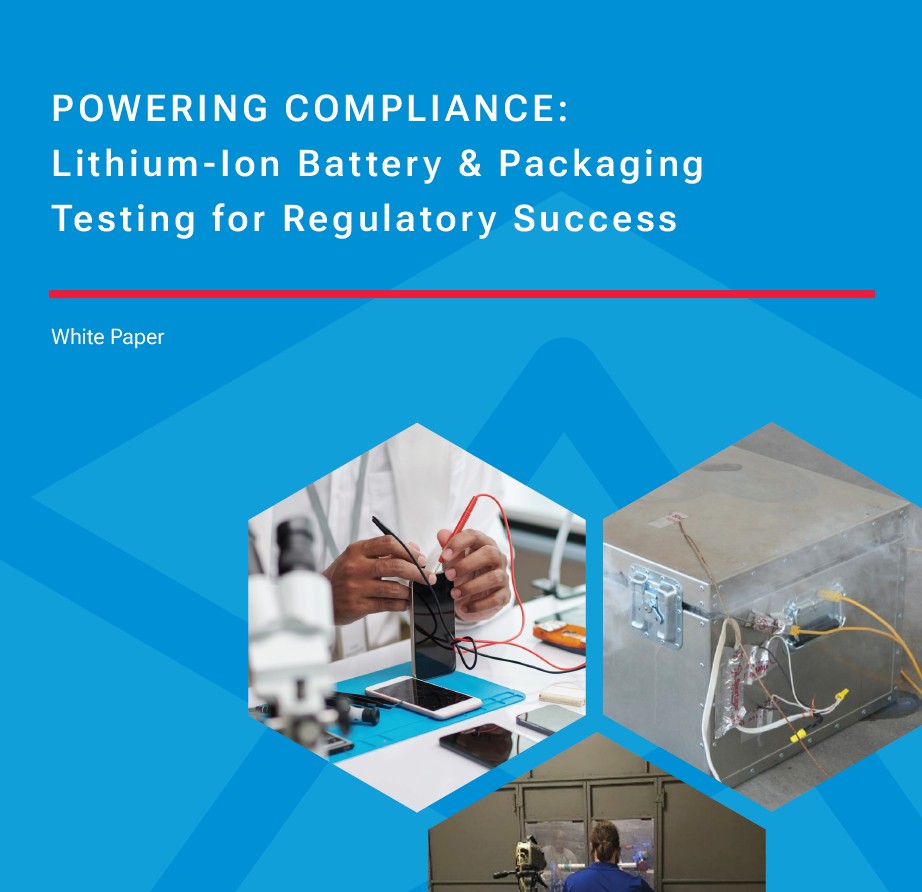
Powering Compliance: Lithium-Ion Battery & Packaging Testing for Regulatory Success
Article Summary With global demand for lithium-ion batteries projected to grow more than sevenfold by 2030, this white paper argues that compliance standards are only as good as the testing behind them, and lays out how Americase contributes real-world testing data to the regulatory bodies that write those standards: the UN Subcommittee on the Transport…
-

·
Inside the SAE G-27 Testing Process: Ensuring Lithium Battery Safety in Transit
Article Summary Safe transport of lithium batteries depends on packaging that has been proven to work, and until recently there was no consistent way to prove it. Before the SAE G-27 standard, lithium-ion battery packaging was evaluated with varied and often inconsistent methods, which created uncertainty about package safety, discrepancies in results between test labs,…
-

·
How are Different Types of Lithium-Ion Batteries Tested to Determine and Verify Optimal Containment?
Article Summary Understanding Battery Capacity and Containment Solutions When it comes to lithium batteries, accurate testing is essential for developing effective containment and suppression solutions. Each battery is unique, and its Battery Management System (BMS) can alter its performance. For example, a battery rated at 3 volts at the cell level may have its charging…
-

·
Translating Test Results Into Design
Article Summary When it comes to designing containers for specialized applications, especially for transporting sensitive equipment like helicopter blades or hazardous materials like lithium-ion batteries, testing plays a crucial role. It’s not just about determining if a design meets current needs; testing often uncovers hidden weaknesses and opportunities for improvement. The insights gained from testing…
-

·
Putting Together a Test Plan: Step By Step Advice
Article Summary Q&A with Raymond James, Principal Engineer Question #1: What are the essential components that should be included in a comprehensive test plan? The essential components that should be included in any test plan start with backtracking a little and determining what the customer is trying to prove with the testing. Once you have…
-

·
How Laboratory Testing Helps Prevent Accidents with Lithium-Ion Batteries
Article Summary Lithium-ion batteries power our everyday lives, from smartphones to electric vehicles. Even though lithium-ion batteries are inherently safe, when mishandled or off-spec, they may pose risks, including thermal runaway, short circuits, and chemical leaks. These hazards underscore the critical importance of rigorous laboratory testing to prevent accidents and ensure safety. This blog will…
-

·
HazMat Packaging Requirements and the Process Behind Shipping Dangerous Goods
Article Summary Hazardous materials (HazMat) are substances that pose a risk to health, property, or the environment during transport, and this article walks through what that classification means and what it takes to package and ship these goods compliantly. Per DOT standards, hazardous materials are those that “can pose an unreasonable risk to health, safety,…