Article Summary
UN 38.3 is the testing framework that determines whether a lithium-ion battery is safe to transport under global shipping regulations, and this article breaks down exactly what it covers. It walks through the eight current core tests (T1–T8): altitude simulation (validating performance in low-pressure air transport environments), thermal cycling (confirming stability across extreme temperatures), vibration and shock testing (replicating shipping conditions and drops or collisions), external short circuit evaluation, impact/crush testing under significant physical pressure, overcharge testing, and forced discharge testing to check hazard levels during rapid discharge to zero. The article also looks ahead to three tests under consideration by the UN Sub-Committee that would add further nuance to battery hazard classification: a propagation test (ensuring a single cell’s thermal runaway doesn’t trigger the entire pack to fail the same way), a gas volume test (measuring gas released during failure), and a gas flammability test (determining whether released gases are flammable) — additions that would sort batteries into sub-categories based on specific hazard profiles rather than one broad classification. It also outlines the two compliance pathways manufacturers can use to demonstrate testing — in-house laboratory facilities or independent third-party testing labs — and frames UN 38.3 compliance as more than a regulatory checkbox, but a matter of protecting people, property, and supply chains as battery size and complexity continue to grow.
Understanding UN 38.3 Battery Testing: Current Standards and What’s Coming Next
Lithium batteries are everywhere — powering everything from smartphones and laptops to electric vehicles and energy storage systems. With such wide use comes significant responsibility: ensuring these batteries can be transported safely across the globe. That’s where the UN 38.3 testing standards come in. These tests are designed to evaluate how batteries perform under stress and prevent failures that could pose safety risks during shipping and handling.
Existing UN 38.3 Tests
The UN 38.3 framework currently includes eight core tests (T1–T8), each simulating a different hazard scenario that batteries may encounter during transport.
- T1 – Altitude Simulation: Ensures batteries can withstand low-pressure environments, such as during air transport.
- T2 – Thermal Test: Subjects cells to extreme temperature cycling to confirm stability across hot and cold conditions.
- T3 – Vibration Test: Replicates vibrations that occur during shipping to ensure no internal or external damage.
- T4 – Shock Test: Tests the ability of batteries to survive sudden impacts, like drops or collisions.
- T5 – External Short Circuit: Evaluates whether a cell can safely handle an external short without leading to fire or explosion.
From there, the standards continue with higher-stress conditions:
- T6 – Impact/Crush Test: Confirms that batteries can withstand significant physical pressure without becoming unsafe.
- T7 – Overcharge Test: Ensures that a cell does not become hazardous if overcharged slightly.
- T8 – Forced Discharge Test: Checks that a cell discharged rapidly to true zero does not pose a hazard.
Together, these eight tests create a rigorous framework for evaluating safety risks across the entire range of battery use and transport scenarios.
Proposed New Additions
The UN Sub-Committee is currently considering three new additions to expand the scope of UN 38.3 testing:
- Propagation Test
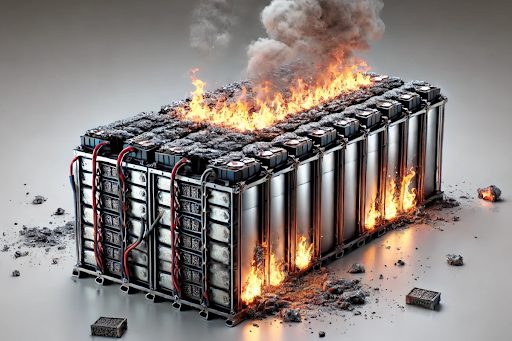
Ensures that if one cell in a battery pack goes into thermal runaway, it will not trigger the entire pack to fail in the same way. - Gas Volume Test
Determines how much gas a cell releases during a failure event. - Gas Flammability Test
Evaluates whether the released gases are flammable, which has major implications for packaging, handling, and transport safety.
These proposed additions would provide deeper insight into the risks associated with modern batteries and strengthen global transportation safety standards by further classifying each cell or battery into its own sub-category based on hazard type.
How Manufacturers Can Ensure Compliance
Battery manufacturers have two main pathways for demonstrating compliance with UN 38.3:
- Internal Test Facilities: Some companies set up their own in-house test labs to manage the process directly.
- Third-Party Test Labs: More commonly, manufacturers rely on independent labs to conduct the testing and issue unbiased reports.
Currently, compliance requires successfully completing T1 through T8. In the future, once the new proposals are adopted, propagation, gas volume, and gas flammability testing will also be mandatory parts of the process.
Why It Matters
The safety of lithium batteries in transport isn’t just a regulatory checkbox — it’s a matter of protecting people, property, and supply chains worldwide. By keeping pace with evolving UN 38.3 requirements, manufacturers and shippers can reduce risks, strengthen compliance, and build trust in the products they deliver. The proposed additions signal a more proactive approach to addressing hazards, helping ensure that as batteries grow in size and complexity, safety measures grow alongside them.
Do you have questions about your company’s compliance? Schedule a quick call with our expert today.
FAQ
Q: What is UN 38.3 testing? A: UN 38.3 is the testing framework used to confirm that lithium-ion batteries can be transported safely under global shipping regulations. It addresses real-world transport hazards through a comprehensive protocol of tests covering altitude, temperature, vibration, shock, short circuit, crush, overcharge, and forced discharge conditions.
Q: What are the eight current UN 38.3 tests (T1–T8)? A: T1 (Altitude Simulation) validates performance in low-pressure air transport; T2 (Thermal Test) confirms stability across extreme temperature cycling; T3 (Vibration Test) replicates shipping vibrations; T4 (Shock Test) assesses survival from drops or collisions; T5 (External Short Circuit) evaluates safety during an external short; T6 (Impact/Crush Test) ensures batteries withstand physical pressure; T7 (Overcharge Test) confirms safety under slight overcharging; and T8 (Forced Discharge Test) checks hazard levels during rapid discharge to zero.
Q: What new tests might be added to UN 38.3? A: The UN Sub-Committee is considering three additions: a propagation test to ensure one cell’s thermal runaway doesn’t trigger the entire pack to fail the same way, a gas volume test measuring gas released during failure, and a gas flammability test determining whether released gases are flammable. These would classify batteries into sub-categories based on specific hazard profiles.
Q: How can manufacturers demonstrate UN 38.3 compliance? A: Manufacturers can demonstrate compliance either through internal test facilities operated in-house, or through independent third-party testing labs that provide external evaluation and certification.
Q: Why is UN 38.3 testing important beyond regulatory compliance? A: The article frames UN 38.3 as more than a regulatory checkbox — it’s about protecting people, property, and supply chains worldwide as lithium battery complexity and size continue to grow.