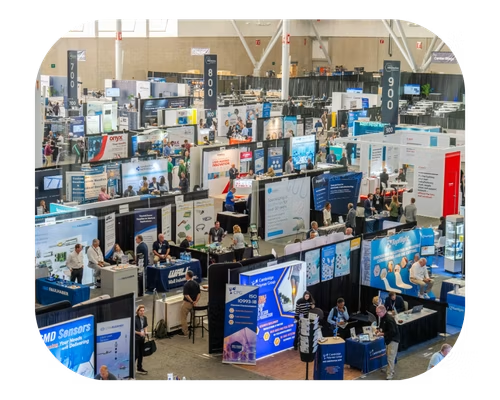
Session led by industry expert Ryan Paquet examines evolving UN, DOT, and IATA rules shaping the safe transport of battery-powered medical technologies
Waxahachie, TX, — August 11, 2026—HazMat Safety Consulting (HSC), a subsidiary of Americase International, today announced that its President Ryan Paquet will present “The Global Logistics of Lithium Battery-Powered Devices” at MEDevice Boston 2026, helping medical device manufacturers prepare for evolving international regulations governing the safe transportation of lithium battery-powered medical devices.
As lithium-ion technology powers a growing share of life-saving and life-sustaining medical devices, manufacturers face increasingly complex international transportation requirements. According to Federal Aviation Administration data, U.S. carriers recorded 93 lithium battery incidents involving smoke, fire or extreme heat aboard aircraft in 2025, a 4.5% increase over the prior year, underscoring why regulators and manufacturers alike are moving quickly to tighten transport rules for battery-powered devices. Understanding evolving regulations is essential for avoiding shipping delays, ensuring patient safety and bringing products to market efficiently. Attendees can expect an early look at proposed international changes and practical guidance for preparing their organizations before new requirements take effect.
For medical device manufacturers, transportation compliance has become a strategic business consideration that can influence product launch timelines, global distribution, recall readiness, and market access within an increasingly regulated global supply chain.
Paquet brings first-hand insight into international regulatory development through his service as Deputy Director of the Medical Device Transport Council (MDTC), an organization that holds observer status with the United Nations Subcommittee of Experts on the Transport of Dangerous Goods.
During the 45-minute session, Paquet will explain the latest work underway at the UN Subcommittee, outline proposed regulatory changes and discuss what they mean for medical device manufacturers. Attendees will leave with practical guidance for maintaining compliance, reducing risk and preparing their organizations for future regulatory changes.
Session details include:
Session Title: The Global Logistics of Lithium Battery-Powered Devices
Presenter: Ryan Paquet, President, HazMat Safety Consulting; Deputy Director, MDTC;
Paquet previously served as Director of Approvals and Permits (and previously Assistant Director of International Standards) at the U.S. Department of Transportation’s Pipeline and Hazardous Materials Safety Administration (PHMSA); and represented the United States as a delegate to the UN Sub-Committee of Experts on the Transport of Dangerous Goods and the International Maritime Organization. He continues active industry participation in international standards development.
Date & Time: Thursday, August 26, 2026, 12:30 PM – 1:15 PM ET
Location: Innovation Spotlight Theater 1.0, Boston Convention & Exhibition Center
Format: In-person, part of MEDevice Boston 2026 / MedTech Innovation Expo
“Regulatory change at the UN level doesn’t stay at the UN level. It flows straight into product design, packaging, and time-to-market for every company shipping lithium-powered medical devices,” said Ryan Paquet, President of HazMat Safety Consulting and former Director of the Approvals and Permits Division at the Pipeline and Hazardous Materials Safety Administration (PHMSA). “Our goal with this session is to help manufacturers get ahead of these changes instead of reacting to them.”
Key topics include:
- Updates from the UN Subcommittee and MDTC working groups
- Proposed changes affecting lithium battery testing, classification and transportation
- Packaging, state-of-charge limits and transportation considerations for battery-powered medical devices
- Preparing for evolving international regulations, including the United Nations (UN), U.S. Department of Transportation (DOT), International Air Transport Association (IATA), and International Civil Aviation Organization (ICAO) requirements
- Practical recommendations for maintaining compliance while supporting innovation
Who should attend:
- Regulatory Affairs
- Quality & Compliance
- Logistics & Supply Chain
- Product Development
- Engineering
- Clinical Operations
- Manufacturing
- Global Trade Compliance
Attendees will also have an opportunity to participate in a live Q&A with Paquet, who previously represented the United States at the UN Sub-Committee of Experts on the Transport of Dangerous Goods and is co-author of Mastering Lithium-Ion Battery Safety.
For additional information or to register for the session, visit: MEDevice Boston 2026 – The Global Logistics of Lithium Battery-Powered Devices
About HazMat Safety Consulting
HazMat Safety Consulting (HSC) is a specialized advisory firm and subsidiary of Americase International providing comprehensive end-to-end dangerous goods (DG) compliance solutions across the full product and logistics lifecycle. HSC partners with organizations in aerospace, defense, energy, healthcare, technology, and industrial sectors to design, implement, and sustain regulatory compliance programs that reduce risk, protect operations, and enable market access.
HSC’s advisory services span the complete DG and HVG compliance continuum: regulatory strategy and gap analysis; hazmat classification, labeling, marking, and documentation; dangerous goods transport compliance under DOT, PHMSA, IATA, IMDG, and international frameworks; emergency response planning; safety management system development; employee training and certification; and ongoing regulatory intelligence across evolving global standards. The firm’s consultants bring former regulatory agency experience—including PHMSA—and decades of operational EHS leadership, enabling HSC to translate complex regulatory requirements into actionable, audit-ready compliance programs.
For organizations managing products that touch transportation, storage, handling, or distribution of hazardous materials or high-value goods, HSC provides the specialized expertise to navigate regulatory complexity with confidence.
To learn more, visit www.hazmatsafety.com
Article summary
HazMat Safety Consulting (HSC), a subsidiary of Americase International, announced that President Ryan Paquet will present “The Global Logistics of Lithium Battery-Powered Devices” at MEDevice Boston 2026 on August 26. The session addresses the international transport regulations reshaping how medical device manufacturers ship lithium-ion-powered products, timed to FAA data showing a 4.5% year-over-year increase in aircraft lithium battery incidents in 2025. Paquet, who serves as Deputy Director of the Medical Device Transport Council and previously represented the U.S. at the UN Subcommittee of Experts on the Transport of Dangerous Goods, will walk attendees through pending changes at the UN, DOT, IATA, and ICAO level and what they mean for product design, packaging, state-of-charge limits, and go-to-market timelines. The 45-minute session includes live Q&A and is aimed at manufacturers who need to plan ahead of regulatory shifts rather than react to them after the fact.
Who this is for
Medical device manufacturers shipping lithium-ion-powered products internationally — specifically teams in Regulatory Affairs, Quality & Compliance, Logistics & Supply Chain, Product Development, Engineering, Clinical Operations, Manufacturing, and Global Trade Compliance who need to plan around upcoming UN/DOT/IATA/ICAO transport rule changes before they take effect.
FAQ
What will Ryan Paquet’s MEDevice Boston 2026 session cover? Paquet will cover current work underway at the UN Subcommittee of Experts on the Transport of Dangerous Goods, proposed regulatory changes affecting lithium battery testing, classification, and transport, and what those changes mean in practice for medical device manufacturers — including packaging, state-of-charge limits, and compliance planning.
Why does lithium battery transport regulation matter for medical device manufacturers? Transportation compliance now affects product launch timelines, global distribution, recall readiness, and market access. FAA data shows U.S. carriers recorded 93 lithium battery incidents involving smoke, fire, or extreme heat in 2025 — a 4.5% increase over 2024 — a trend driving regulators to tighten transport rules for battery-powered devices, including medical devices.
Who should attend this session? Professionals in Regulatory Affairs, Quality & Compliance, Logistics & Supply Chain, Product Development, Engineering, Clinical Operations, Manufacturing, and Global Trade Compliance at medical device companies that ship lithium-ion-powered products internationally.
When and where is the session taking place? Thursday, August 26, 2026, 12:30–1:15 PM ET, at the Innovation Spotlight Theater 1.0, Boston Convention & Exhibition Center, as part of MEDevice Boston 2026 / MedTech Innovation Expo.
What is Ryan Paquet’s background? Paquet is President of HazMat Safety Consulting and Deputy Director of the Medical Device Transport Council (MDTC), which holds observer status with the UN Subcommittee of Experts on the Transport of Dangerous Goods. He previously served as Director of the Approvals and Permits Division (and earlier, Assistant Director of International Standards) at PHMSA, and represented the United States as a delegate to the UN Subcommittee and the International Maritime Organization. He is co-author of Mastering Lithium-Ion Battery Safety.
How can I register or get more information? Visit the MEDevice Boston 2026 session page for registration and additional details.