Article Summary
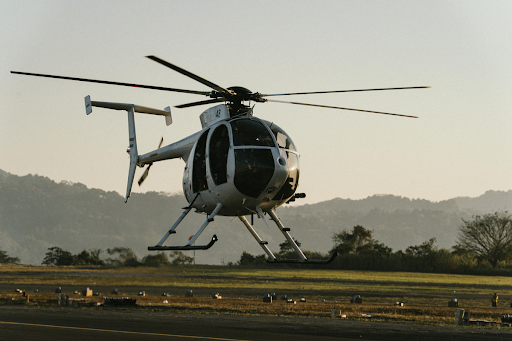
Helicopter transport introduces a uniquely high-risk environment for cargo due to constant vibration, rapid altitude changes, environmental exposure, and unpredictable handling conditions. The article argues that aerospace cases are not passive containers but engineered systems designed to mitigate these risks and ensure the integrity of mission-critical components. Standard packaging approaches are insufficient in rotary-wing operations, where failure can result in equipment damage, safety hazards, and operational disruption. The core position is that purpose-built, tested, and customized containment solutions are essential for safe and compliant helicopter logistics.
The article outlines several key engineering principles that define effective aerospace cases. First, containers must be designed to withstand combined environmental stressors, including vibration fatigue and moisture exposure, through features such as custom inserts, desiccant systems, and sealed environments. Second, rigorous validation through UN Packaging Group I testing ensures durability under real-world impact conditions. Third, custom engineering is emphasized to ensure the container meets and exceeds all the specifications and customer-specific needs, with on-site collaboration used to align container design with specific payload and operational requirements. Finally, the integration of environmental controls enables safe transport of sensitive materials by actively managing internal conditions rather than relying solely on structural protection.
For decision-makers in aerospace and logistics, the takeaway is clear. Investing in engineered aerospace cases reduces risk, supports regulatory compliance, protects valuable helicopter parts and components, and improves operational reliability in demanding transport environments. In helicopter deployments where conditions are variable and failure tolerance is low, container design becomes a critical component of overall system performance rather than a secondary consideration.
When Failure Isn’t an Option: Why Aerospace Cases Are Critical for Safe Transport and Storage of Helicopter Parts and Components
Helicopter logistics doesn’t forgive mistakes. When shipping high value and fragile cargo, such as helicopter blades, engines, and other key components, it’s exposed to a combination of potentially damaging conditions during transport and handling. Constant vibration, rapid altitude shifts, unpredictable weather, and hard landings all create a high-risk profile for any payload. That’s why specialized helicopter containers are essential for protecting mission-critical components in transit.
At Americase, we approach this challenge with one clear belief. Aerospace cases are not just containers. They are engineered systems designed to actively protect high-value and often sensitive cargo in the most demanding conditions. Our extensive expertise designing and manufacturing custom aerospace container solutions reflects that philosophy in practice. Helicopter parts transport introduces multiple environmental stressors at once, including vibration, humidity, temperature swings, and physical impact. Each of these factors has the potential to compromise cargo integrity if it isn’t accounted for during protective container design.
What makes this even more complex is that no two missions are the same. Different helicopter parts, shipping and handling specifics,and deployment environments require tailored solutions. That’s why we don’t rely on standardized packaging. We engineer every case to meet the exact needs of the application through our custom case design process.
In this article, we’ll walk through how aerospace cases are designed to perform in helicopter logistics and deployments, and why the right helicopter cargo container is critical to mission success.
Built for Turbulence: How Aerospace Cases Protect Against Vibration, Altitude, and Environmental Extremes
We believe the defining challenge of helicopter cargo transport is the convergence of multiple environmental forces acting at once. Shipping sensitive helicopter parts exposes them to sustained vibration, rapid altitude changes, and direct environmental exposure throughout the journey. Additionally loading and unloading the cases can cause damages from forklifts. That means aerospace cases must be engineered as complete protective systems, not just structural enclosures.
Vibration is one of the risks and can lead to damage to both the cargo and packaging. That’s why we work directly with customer engineering teams to define exact vibration tolerances and design packaging systems that mitigate those challenges. Internal frames, custom cut inserts, and vibration-absorbing features are integrated into case designs to ensure the cargo is protected throughout the journey.
Environmental exposure adds another layer of complexity. Humidity and temperature fluctuations can degrade sensitive materials or introduce corrosion risks. To address this, we integrate humidity indicators, desiccant systems, and controlled environments directly into our case designs.
Consider a commercial operator transporting rotor blades to an offshore platform. The cargo is exposed to salt air, temperature swings, and constant vibration. Without a properly engineered solution, those blades could arrive compromised. With a custom helicopter rotor blade case, they remain protected, stable, and ready for deployment.
Proven Under Pressure: Why UN PG 1 Testing Sets the Standard for Aerospace Transport Containers
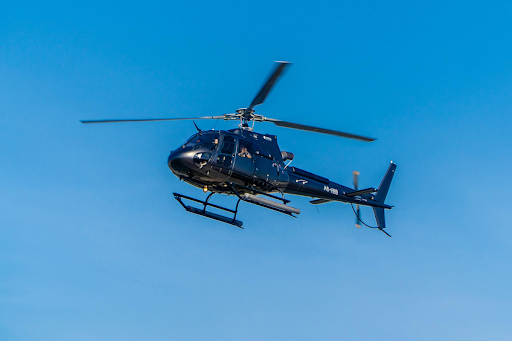
If a container hasn’t been proven under real-world stress conditions, it shouldn’t be trusted with mission-critical cargo. That’s why we build our aerospace cases to meet UN Packaging Group I standards, including drop testing from 5.9 feet to simulate extreme handling scenarios.
In helicopter operations, those scenarios are common. Rapid loading, uneven terrain, and loading/unloading all increase the likelihood of impact events. Containers must be able to absorb those forces without transferring damage to the payload.
Imagine a maintenance team transporting a helicopter engine into a remote mountainous region. During unloading, the case is dropped. A non-certified container could fail under impact. A properly engineered helicopter engine case is designed to absorb that force and protect the component inside. Testing doesn’t eliminate risk, but it ensures performance when it matters most.
No Two Missions Are Alike: Why Custom Aerospace Cases Outperform Off-the-Shelf Solutions
We’ve seen firsthand that no two helicopter transport challenges are the same. Off-the-shelf packaging simply cannot meet the demands of aerospace logistics. That’s why we prioritize tailored engineering over generic enclosure design.
Our process starts with collaboration. We go on-site, work directly with customer engineering teams, and define every requirement before design begins. That includes dimensions, weight distribution, vibration thresholds, handling conditions, and environmental exposure.
A helicopter OEM transporting rotor assemblies with complex geometries illustrates the difference. A generic container introduces movement and risk. A custom case uses precision inserts to secure each component, reducing movement and improving protection. That same thinking drives our custom process for engineered case development.
Customization also improves efficiency. When packaging is designed for the exact application, handling becomes faster, safer, and more predictable. Plus, safely delivered components are ready for deployment and operational delays are avoided. In aerospace logistics, precision isn’t optional. It’s essential.
Engineering Confidence in Every Flight: The Role of Aerospace Cases in Mission-Critical Success
Helicopter deployments demand precision at every level. The combination of vibration, environmental exposure, and unpredictable handling creates a demanding transport environment where failure isn’t an option.
At Americase, we design reusable, regulation-compliant aerospace transport containers that have been rigorously tested to perform under these conditions. Our aerospace cases combine custom design, testing, precision fabrication, and custom manufacturing, to ensure that cargo arrives exactly as intended.
No two missions are identical, which is why every case we build is tailored to the specific demands of the payload and environment. This approach helps our helicopter OEM and MRO customers reduce risk, maintain compliance, and protect operations across the demanding aerospace industry..
In helicopter logistics, the right container doesn’t just move cargo. It ensures mission success from start to finish.