Article Summary
Lithium-ion battery shipments have shifted from exceptional cargo to routine, high-volume logistics, and PHMSA’s own numbers show why regulators have stopped treating labeling mistakes as forgivable inexperience: incidents rose 67% between 2016 and 2021. This article walks through where shippers actually get tripped up. UN classification comes first: UN3480, UN3481, UN3090, and UN3091 aren’t interchangeable codes but legal distinctions tied to the specific shipping scenario (spare batteries, batteries packed with equipment, or batteries installed in equipment), and a 2023 DOT audit found more than 40% of lithium battery labeling violations traced back to incorrect or missing UN numbers, a mistake illustrated by a real case where mislabeled spare drone batteries triggered FAA involvement and a two-week operational suspension. The article also tracks the shrinking Section II exception, historically a way to bypass documentation for small shipments, now abused enough that the FAA logged a 56% rise in undeclared hazmat incidents between 2018 and 2022, prompting major carriers like UPS and FedEx to require pre-approval or reject Section II packages outright. It closes on the volume problem: scaling from individual units to wholesale palletization can trigger Class 9 labeling, full documentation, and placarding requirements that a company’s existing labeling practices weren’t built for, with PHMSA reporting that bulk lithium shipments account for over 70% of hazmat enforcement actions in air cargo. A real-world example of a $200,000 contract lost over a single mislabeled mobile phone battery shipment grounds the stakes throughout.
The Labeling Mistakes That Could Cost You Your Business
Lithium-ion batteries are no longer fringe cargo. They’re in everything from phones to forklifts, and if you’re shipping them, your packaging better announce exactly what’s inside. Regulators don’t care if you’re new to hazmat. They care if your battery catches fire mid-flight. Labeling is not a formality—it’s survival. And the rules? They’re changing fast.
In the past, you could throw a battery into a box, slap on a caution label, and hope for the best. Today, there are classifications to know, exceptions disappearing, and carrier crackdowns that are anything but subtle. Industry authorities now refer shippers to the PHMSA’s Lithium Battery Guide for Shippers (2024) for scenario‑based shipping requirements. Whether you’re shipping spare batteries, consumer electronics, or an EV pack, if you’re not following the latest guidelines, you’re gambling with cargo holds, human lives, and your entire operation.
This post breaks down the evolving landscape of lithium battery labeling and why the stakes are only getting higher. We’ll uncover how misclassifying your shipment could cost you your carrier, your product, or worse. We’ll explain the shrinking gray area around exemptions, the hard lines around UN numbers, and how the wrong sticker can set off more than just alarms.
The Everyday Battery That’s Now a Full‑Time Hazard
Lithium-ion batteries have transformed from occasional cargo to daily freight. The rise in demand for battery-powered devices has created a new normal: lithium batteries aren’t a niche commodity anymore. They’re the backbone of modern logistics. And that shift has made regulators rethink everything.
In the past, small lithium batteries were often treated as an exception. Consumer electronics with embedded batteries were waved through as low-risk. But as lithium battery shipments multiplied, so did the incidents. According to PHMSA, incidents involving lithium batteries increased by 67% from 2016 to 2021. That kind of trend wakes up regulators. It also wakes up insurers, carriers, and enforcement agencies.
The result is a regulatory environment that’s closing loopholes. What used to pass under the radar now gets flagged. A small battery shipment that once fell under exception” might now require full hazmat documentation and labeling. If you’re not aware of the change, your shipment might be rejected or worse—confiscated.
For example, a logistics company recently shipped a batch of mobile phone batteries using outdated labeling. They assumed the old guidance still applied. It didn’t. The shipment was detained, the carrier refused to transport it further, and they lost a $200,000 contract. This wasn’t a high-energy EV pack. These were consumer-grade batteries. The kind you might have in your backpack right now. That’s how low the bar is for things to go wrong.
The takeaway is clear: lithium battery shipments are now under a microscope. You’re not the exception. You are the rule. If you want to stay in business, your labeling practices need to catch up—and fast.
UN Numbers Are Not Optional, They’re Your Lifeline
One of the biggest mistakes shippers make with lithium batteries is assuming one label fits all. It doesn’t. Not even close. Lithium battery shipments are divided by what you’re shipping and how. Are you shipping a battery alone, a battery packed with equipment, or a battery installed in equipment? Each scenario has its own classification, and each classification has its own labeling requirements.
UN3480, UN3481, UN3090, UN3091—these aren’t just codes. They are legal distinctions that tell regulators and emergency responders what they’re dealing with. Get them wrong, and you’re not just mislabeling. You’re violating federal law. According to a 2023 DOT audit summary, over 40% of lithium battery labeling violations were due to incorrect or missing UN numbers. That is not a rounding error—that is a systemic problem across the industry.
Take the classic mistake of shipping a spare battery labeled as if it were installed in equipment. There was a case where a company sent out drone batteries using UN3481 labeling. But they weren’t packed with or installed in drones. They were spares—qualifying as UN3480. The result? FAA got involved, the carrier filed a report, and the company had to halt operations while they retrained staff and restructured their SOPs. One wrong label shut them down for two weeks.
The proper label doesn’t just identify what’s inside. It determines how that package moves through the supply chain. It tells the carrier how to handle it, tells emergency responders how to approach it, and tells regulators whether to audit you or not. Mislabeling isn’t just bad form. It’s a fast track to financial and legal problems. If you don’t know your UN numbers, you have to learn them before shipping lithium batteries.
The Section II Loophole Is Closing
If you’re still leaning on Section II exceptions, you’re living in the past. It used to allow shippers to bypass certain labeling and documentation requirements if the batteries were small and within a defined quantity. But regulators and carriers alike are pulling the plug on these exceptions.
The reason is simple: enforcement. Too many companies abused Section II. They cut corners, ignored packaging standards, and labeled high-risk batteries as if they were harmless. That led to a spike in undeclared hazmat incidents, many of them tied to so-called exempt packages. According to the FAA, undeclared hazmat incidents rose by 56% between 2018 and 2022, with lithium batteries leading the charge.
Carriers have noticed. Many, including UPS and FedEx, now refuse to accept Section II packages without prior approval or extensive screening. Others reject them outright. There was a supplier that lost their entire carrier contract after three consecutive Section II violations triggered incident reports. And it is not likely that another carrier would pick you up after that.
The writing is on the wall. Section II exceptions for standalone batteries are gone (although when batteries are contained in equipment or packed with, Section II is still common), and smart shippers are adjusting their practices. That means switching to full documentation, standardized labeling, and internal compliance audits. It means treating every battery shipment—no matter how small—as a hazmat risk until proven otherwise.
How Volume Turns Innocent Shipments into Hazmat Problems
One of the most dangerous traps in lithium battery shipping is assuming size doesn’t matter. But when it comes to labeling and regulation, size changes everything.
The energy content of a lithium-ion battery determines how it’s classified. But once quantity increases, so does the regulatory burden. A small battery powering headphones might require only a lithium battery mark. But 200 of them in a box? That same shipment might now require a Class 9 label, full shipping documentation, and even placarding depending on mode of transport.
This is what could be called the hazmat creep. One or two packages seem safe, manageable. Then, little by little, you scale. Suddenly, what was a minor shipment is now a regulatory issue. For example, a company who scaled from direct-to-consumer shipments to wholesale palletizing didn’t update their labeling or containment methods. The result was a DOT violation and a temporary ban from their primary air carrier.
According to PHMSA’s modal transport report, bulk lithium battery shipments accounted for over 70% of hazmat-related enforcement actions in the air cargo sector. That’s not a coincidence. Volume attracts attention. If you’re shipping in bulk and still labeling like you’re shipping a phone to your friend, you’re a compliance risk—and an enforcement target.
Label Like Lives Depend on It
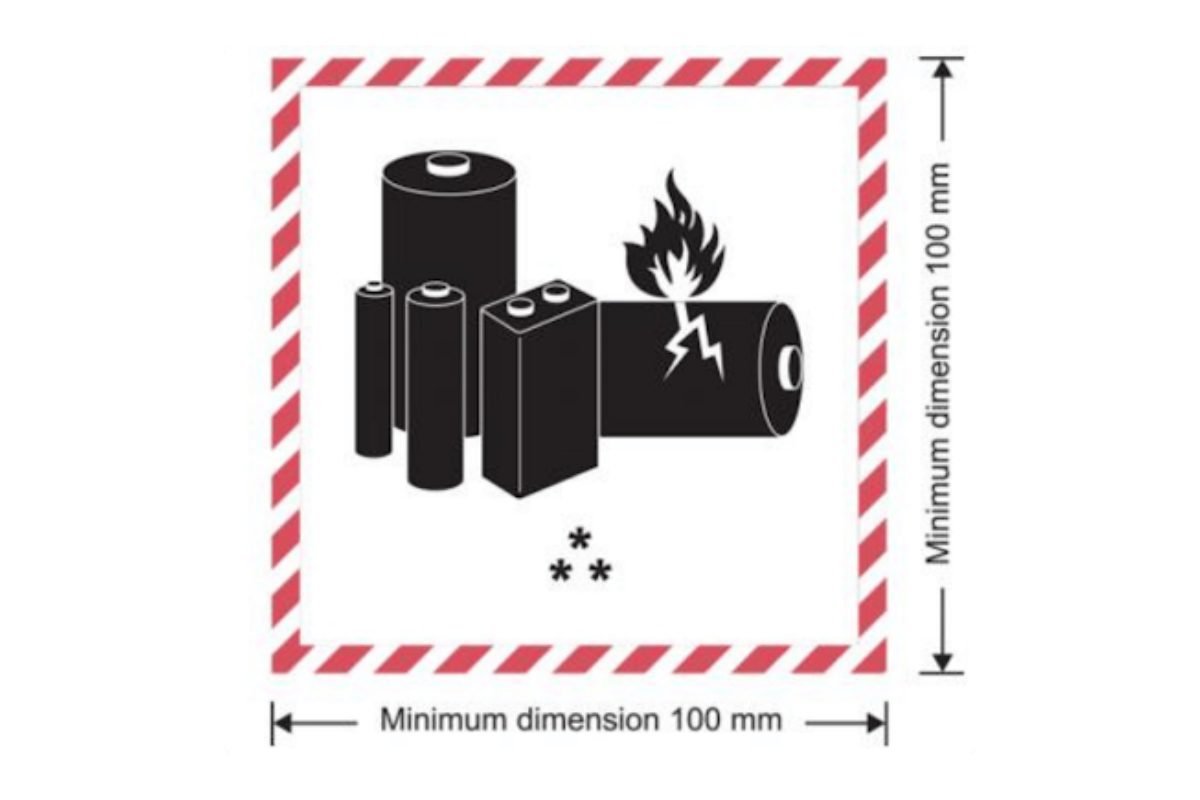
Lithium battery labeling isn’t a paperwork task. It’s a frontline safety measure. From UN numbers to pictograms to shipping names, every detail on that label carries weight. Regulators see it. Carriers scrutinize it. Emergency responders depend on it. And if you get it wrong, it won’t be a quiet mistake. It will be a reportable incident. It might be a lawsuit. It could be a life lost.
If your company ships lithium batteries, your team should be trained to classify, contain, and communicate. If not, then you’re not just risking a citation. You’re risking your entire operation. Label like lives depend on it. Because they do.
Do you have questions about proper labeling your hazmat shipments? Schedule a call with an expert today!
FAQ
Q: Why are lithium-ion battery labeling mistakes treated so seriously now?
A: Because lithium battery shipments have become mainstream, high-volume cargo rather than a niche category, and PHMSA data shows incidents rose 67% between 2016 and 2021. Regulators now prioritize fire prevention and consistent compliance over accommodating shipper inexperience, and mislabeling can lead to carrier rejection, contract termination, or operational shutdown.
Q: What’s the difference between UN3480, UN3481, UN3090, and UN3091?
A: They’re distinct legal classifications, not interchangeable codes. UN3480 and UN3481 apply to lithium-ion batteries (spare, or packed with/installed in equipment, respectively), while UN3090 and UN3091 apply to the same scenarios for lithium metal batteries. The correct designation depends on the specific shipping scenario and determines carrier handling protocols and emergency response procedures.
Q: How common are UN number errors in lithium battery labeling violations?
A: A 2023 DOT audit found that over 40% of lithium battery labeling violations were due to incorrect or missing UN numbers, making it one of the most common compliance failures shippers run into.
Q: What is the Section II exception, and why is it shrinking?
A: Section II historically allowed shippers to bypass certain documentation requirements for small-quantity lithium battery shipments. Widespread abuse of that exception contributed to a 56% rise in undeclared hazmat incidents between 2018 and 2022, according to FAA data, and major carriers including UPS and FedEx now require pre-approval for Section II packages or reject them outright.
Q: How does shipment volume change lithium battery labeling requirements?
A: As shipments scale from individual units to wholesale palletization, energy content classification thresholds can be crossed, triggering Class 9 hazmat labeling, full documentation, and potential placarding obligations. PHMSA’s modal transport report identifies bulk lithium shipments as accounting for over 70% of hazmat-related enforcement actions in the air cargo sector.
Q: What happens when a lithium battery shipment is mislabeled?
A: Consequences range from carrier detention and shipment rejection to contract termination and regulatory involvement. The article cites a real case where a mislabeled mobile phone battery shipment resulted in a $200,000 contract loss, and another where mislabeled spare drone batteries triggered FAA involvement and a two-week operational suspension.