
FREE Live Webinar
Inside the Room Where the Rules are Written: The ICAO Dangerous Goods Panel Explained
Fewer than 20 people in the world write the rules that govern what goes on every commercial flight. Three of them — including a former ICAO Dangerous Goods Panel Chair and Vice Chairman — join us live to explain how those rules actually get made.
EVENT DETAILS
Tuesday, September 8, 2026
4:00 PM – 5:00 PM EDT
LinkedIn Live – Free
Watch The Recording
Session Overview
Most dangerous goods professionals live by ICAO’s Technical Instructions — but almost none have seen how those rules actually get made. In this session, you’ll go inside the ICAO Dangerous Goods Panel with three people who’ve sat at that table: how members are nominated, how proposals get debated, and how a single line item moves from someone’s idea to a binding international regulation.
193
Countries bound by the ICAO Technical Instructions this panel produces, as parties to the Chicago Convention
1.25M+
Dangerous goods shipments moved by air every year — a volume climbing with global trade and e-commerce
IATA, What You Need To Know About The Transport Of Dangerous Goods By Air
93
Verified lithium battery incidents on U.S. aircraft in 2025 alone, including 13 on cargo aircraft — up from 89 the year before.
SPEAKER 1: Former ICAO Dangerous Goods Panel Chair & Vice Chairman
/
SPEAKER 2: Former ICAO Dangerous Goods Panel Vice Chairman
/
SPEAKER 3: Former IATA Representative to the ICAO DG Panel
/
No Cost to Attend
The Regulatory Reality in 2026
The rules you follow were shaped by fewer than 20 people — and you’ve likely never heard how
This isn’t abstract policy. A single change to the ICAO Technical Instructions can reshape packaging requirements, training programs, and liability exposure for every airline, freight forwarder, and shipper operating internationally. The process behind those changes has always stayed behind closed doors — until now.
The process most compliance teams never see
ICAO’s Dangerous Goods Panel decides what’s allowed on every commercial aircraft, worldwide — yet almost no one outside the panel has had this process explained firsthand. Understanding how proposals move from idea to regulation means anticipating change instead of reacting to it, and knowing where your organization genuinely has a voice versus where the outcome is already settled.
Every 2 years
How often the Technical Instructions are formally revised and republished — the current edition covers 2025–2026.
Fewer than 20
The number of people who sit on the ICAO Dangerous Goods Panel at any given time. Three of them will be live on this call.
ICAO DG panel membership data
33%/<1%
Air cargo carries less than 1% of world trade by volume but around 33% by value. The rules this panel writes govern a disproportionately high-stakes slice of the global economy.
67th Edition
The IATA Dangerous Goods Regulations are rewritten every single year. The debates happening inside rooms like this one are why the rulebook never stays still.
Real-World Impact in 2025–2026
-Lithium battery incidents on U.S. aircraft climbed to 93 in 2025, up from 89 the year before — and battery-related provisions are among the most active items currently on the panel’s agenda.
-E-commerce continues to pull more first-time, less-experienced shippers into the dangerous goods supply chain, raising the cost of not understanding how the rules evolve.
-Because the Technical Instructions apply across 193 countries, a single panel decision can ripple through packaging, training, and compliance programs industry-wide — often before most organizations even know a change is coming.
Sources: FAA 2025 Lithium Battery Incident data; IATA and ICAO public data on shipment volume and the Technical Instructions publication cycle. Figures should be independently verified for your specific operations.
Session Topics
What you’ll learn on September 8
Firsthand guidance from three people who’ve written, debated, and defended these rules from inside the process.
Topic 01
How the Panel Actually Works
How ICAO Dangerous Goods Panel members are nominated and selected, and how the group is structured.
Topic 02
From Proposal to Regulation
The real process — not the textbook version — behind moving a proposed change to a published Technical Instruction.
Topic 03
Where Industry Input Matters
Where the panel genuinely listens to industry input, and where the process stays closed.
Topic 04
What’s on the Agenda Now
What’s currently being debated, including active issues like lithium battery risk, that could shape the next edition of the rules.
Topic 05
Engaging the Process
How to engage more effectively with the regulatory process from wherever you sit in the supply chain.
Topic 06
Live Q&A With the Panel
Real-time answers to your questions from a former Chair, Vice Chairman, and IATA representative — not a scripted panel.
Featured Experts
Our Keynote Speakers
Three people who’ve shaped international dangerous goods regulation from inside the process — combining decades of technical, diplomatic, and industry experience.

Bob Richard
Vice President, HazMat Safety Consulting
HAZMAT SAFETY CONSULTING
Bob Richard brings more than 40 years of experience in hazardous materials transportation safety. He previously served as Deputy Associate Administrator for Hazardous Materials Safety at PHMSA, and is one of the few people to have chaired both the UN Sub-Committee of Experts on the Transport of Dangerous Goods and the ICAO Dangerous Goods Panel. He also led U.S. delegations to the IMO’s dangerous goods and container sub-committee and holds the Certified Dangerous Goods Professional (CDGP) credential.
“I’ve sat on both sides of this table — chairing the UN process and the ICAO panel — and the biggest misconception I still hear is that industry has no voice. It does, but only if you understand where to use it.”

Duane Pfund
Sr. Consultant, HazMat Safety Consulting
HAZMAT SAFETY CONSULTING
Duane Pfund brings over 35 years of demonstrated leadership within the U.S. federal government, including 20 years as Director of PHMSA’s Office of Hazardous Materials Safety International Program. For the past decade, he has served as Chairman of the United Nations Sub-Committee of Experts on the Transport of Dangerous Goods, and was nominated by the United States to the ICAO Dangerous Goods Panel. His portfolio also includes U.S. representation to the IMO and the European Joint Meeting of the RID/ADR/ADN, lead negotiation on dangerous goods trade initiatives with the EU, Canada, Mexico, and China, and service as Designated Federal Official for the congressionally mandated Lithium Battery Air Safety Advisory Committee.
“Every Technical Instruction started as someone’s proposal and years of negotiation. If you ship dangerous goods for a living, knowing how that process works isn’t optional — it’s part of the job.”
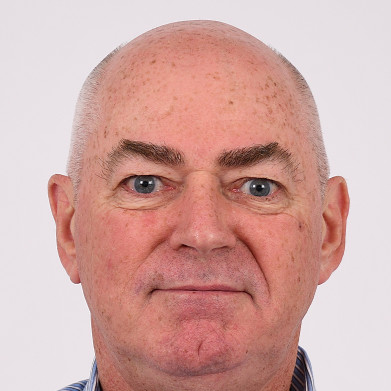
Dave Brennan
Former IATA Representative, Private Consultant
Dave Brennan spent 21 years at IATA (2002–2023), ultimately leading the organization’s Cargo Safety & Dangerous Goods function. He served as Secretary of the IATA Dangerous Goods Board and, from 2006 to 2023, as IATA’s nominated member on the ICAO Dangerous Goods Panel. Today, as Director of Dangerous Goods by Air Consulting, he advises on lithium battery transport, dangerous goods consultancy, and radiopharmaceutical supply chain issues.
“Nearly twenty years inside that room taught me that the rules evolve faster than most compliance teams realize. Staying ahead of that curve is a real competitive advantage.”
WHO WE ARE
About the Organizers
HAZMAT SAFETY CONSULTING
HazMat Safety Consulting (HSC) provides specialized advisory services in hazardous materials safety, regulatory compliance, dangerous goods transportation, risk management, and organizational readiness. A subsidiary of Americase International, HSC partners with organizations across industries to reduce risk, improve compliance outcomes, and strengthen safety leadership where failure is not an option.
AMERICASE INTERNATIONAL
Americase International delivers end-to-end mission-critical protection solutions through integrated engineering, testing, and regulatory expertise — combining HazMat Safety Consulting, Americase, and Fulcrum Testing. Backed by more than 200 years of combined regulatory experience and nearly 50 years of engineering and manufacturing expertise, the company serves aerospace, defense, energy, medical, and technology industries worldwide.
Frequently Asked Questions
Selection depends on whether a nominee comes from a government or an industry background. On the government side — using the United States as an example — a candidate must submit a CV demonstrating knowledge of aviation safety and dangerous goods. The nomination comes from the Secretary of Transportation and goes to the U.S. permanent mission at the International Civil Aviation Organization (ICAO), where the Air Navigation Commission (ANC) reviews the nominee and must officially agree they’re qualified. On the industry side, a candidate from the International Air Transport Association (IATA) prepares a CV that’s vetted within the trade association, then submitted through the IATA representative to ICAO and reviewed by the Air Navigation Commission before the nomination is finalized.
Three NGOs hold a formal vote on the Dangerous Goods Panel: IATA (representing airlines), IFALPA (representing airline pilots), and ICCAIA (representing airframe manufacturers). Other NGOs, such as the Dangerous Goods Advisory Council (DGAC) and CEFIC, don’t have a vote but can comment on proposals, share ideas, educate regulators on industry impacts, and submit their own proposals.
Passenger aircraft carry hundreds of people with no aviation training and no awareness of what’s being carried beneath them. Cargo aircraft, by contrast, generally carry only trained pilots who receive detailed documentation of the dangerous goods on board, follow specific safety procedures, and have the authority to refuse a shipment if necessary.
No — every amendment is reviewed individually. Because aviation involves unique hazards, such as flying over oceans or experiencing pressure differentials, ICAO often sets more stringent or cautious restrictions than what’s approved for general land or maritime transport.
According to the panelists, the current lithium battery provisions — which use only four UN numbers — are already widely criticized as too complicated to follow. Moving to a more granular system with potentially 10 or more UN numbers could end up making the regulations even harder for shippers to comply with.
There’s no definition of “shipper” in the ICAO Technical Instructions. Because air cargo passes through many hands — packagers, truck drivers, and freight forwarders across different countries — pinning responsibility on a single entity is highly complex, and it’s generally left to individual states to regulate pre-transportation functions and hold contributing entities accountable.
ICAO is actively working to modify the Technical Instructions to address dangerous goods transport on unmanned aerial systems. The regulations haven’t been finalized, but they’re getting close and will likely be introduced in the 2029 edition.
Data Sources & Attribution
Statistics are drawn from IATA, FAA, UNECE, and ICAO public data. Penalty and incident figures reflect the most recently published data available as of 2025–2026. All figures should be independently verified for your specific operations, as actual regulatory impact depends on case-specific factors.
JOIN US FOR THE WEBINAR
Join three former ICAO Dangerous Goods Panel members for this live session!
Protect Your Innovation
Partner with Americase, the trusted leader in mission-critical containment.