
- This event has passed.
CHEMTREC International Hazmat Summit
HazMat Safety Consulting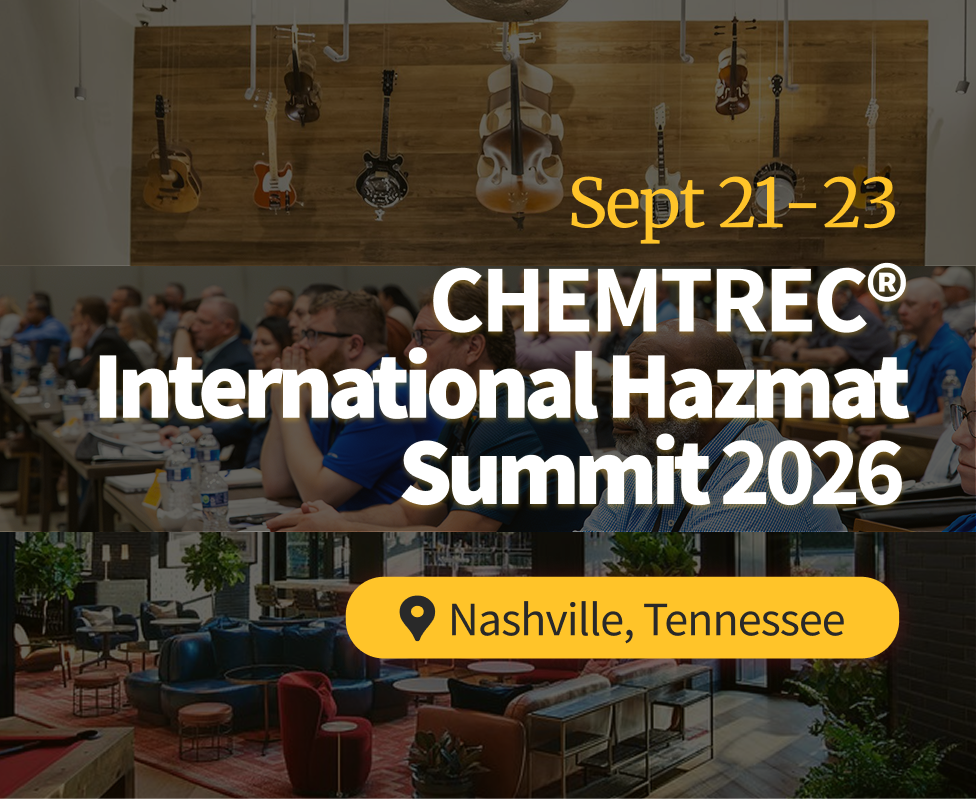
On-Site Lithium Battery Storage Standards: Navigating Risks, Prevention Strategies, and the Regulatory Gap
HazMat Safety Consulting (a division of Americase International)
Join Mike Pagel for a Practical Look at On-Site Lithium Battery Storage Standards, Risk Pathways, and Prevention in an Under-Regulated Environment
As lithium-ion and other advanced batteries power everything from electric vehicles to critical infrastructure, the absence of comprehensive battery storage regulations has left many organizations exposed to evolving fire, thermal runaway, and hazmat risks. In this timely session, Mike Pagel, Senior Consultant with HazMat Safety Consulting (a division of Americase International), delivers a practical overview of the broader battery risk landscape with focused attention on on-site lithium battery storage standards and fixed facilities.
Attendees will gain a clear-eyed understanding of where current standards fall short, how incidents typically escalate, and the proven prevention and preparedness measures that can close the gap. Designed for professionals responsible for hazmat readiness, this discussion moves beyond theory to actionable insights that strengthen safety programs in an under-regulated environment.
Session Title: On-Site Lithium Battery Storage Standards: Navigating Risks, Prevention Strategies, and the Regulatory Gap
Presenter: Mike Pagel, Senior Consultant, HazMat Safety Consulting (a division of Americase International)
Program Track: Hazmat Preparedness and Safety, Risk & Readiness
Date and Time: September 21, 2026 1:30pm
Session Description Lithium battery deployment continues to accelerate across warehouses, distribution centers, energy storage sites, and fixed facilities—yet clear, unified on-site storage standards remain limited. This session examines the real-world risk pathways associated with on-site lithium battery storage, the regulatory gaps that increase exposure, and the practical prevention, detection, and mitigation strategies organizations can implement today.
Mike Pagel walks through how battery hazards escalate in storage environments, where traditional emergency plans fall short, and how facilities can strengthen risk assessment, storage practices, and hazmat readiness protocols. The discussion is grounded in operational realities and designed to equip attendees with clear next steps for safer, more resilient programs.
Key Topics Include:
- Primary risk pathways for battery systems, including thermal runaway, off-gassing, and secondary fires in on-site storage and fixed-facility settings
- Critical gaps created by the lack of unified on-site lithium battery storage regulations and their impact on facilities and response teams
- Practical prevention, detection, and mitigation strategies that reduce the likelihood and severity of battery-related incidents
- Integration of battery hazards into existing hazmat preparedness frameworks and updates needed for traditional emergency plans
- Actionable steps for strengthening risk assessment, storage practices, and readiness protocols
Why Attend This Session?
- Understand the specific risks of on-site lithium battery storage in the absence of comprehensive regulations
- Learn practical, implementable prevention and mitigation strategies from a hazmat safety specialist
- Identify gaps in current facility standards and emergency plans before an incident occurs
- Gain clear next steps to improve risk assessment, storage protocols, and overall readiness
- Connect the discussion directly to the broader Hazmat Preparedness and Safety, Risk & Readiness track
Who Should Attend? This session is ideal for EHS, safety, and compliance managers overseeing facilities that store, handle, or charge large quantities of batteries; emergency response coordinators, fire chiefs, and hazmat team leaders; facility and operations managers responsible for warehouses, distribution centers, or fixed energy storage sites; risk managers, insurance professionals, and corporate safety leaders evaluating emerging battery exposures; and anyone involved in developing or refining hazmat preparedness and readiness programs in an evolving regulatory landscape.
FAQs
Q: Who should attend this session? A: EHS and safety professionals, facility and operations managers, emergency response and hazmat teams, risk and insurance leaders, and anyone responsible for battery storage, handling, or hazmat readiness at fixed facilities or warehouses.
Q: What makes this session timely? A: The rapid growth of lithium battery use in storage and fixed facilities has outpaced comprehensive regulations. Organizations need practical guidance now on risk pathways, prevention strategies, and how to close the gap while standards continue to evolve.
Q: Will the session focus on on-site storage standards? A: Yes. The discussion centers on on-site lithium battery storage standards, the current regulatory landscape (and its gaps), and actionable prevention and preparedness measures tailored to storage and fixed-facility environments.
Q: How does this session connect to the broader program track? A: It sits within the Hazmat Preparedness and Safety, Risk & Readiness track, providing focused, operational insights that support overall hazmat readiness programs.
Q: Is the content practical or theoretical? A: Practical. Attendees leave with a clear understanding of real-world risk pathways, regulatory gaps, and specific steps they can take to strengthen storage practices, detection, mitigation, and emergency planning.