Mike Pagel will discuss lithium battery risk pathways, prevention strategies and evolving storage standards for warehouses, distribution centers and fixed facilities.
Article Summary
Americase International announced that Mike Pagel, Senior Consultant at HazMat Safety Consulting (HSC), an Americase International company, will present at the CHEMTREC International Hazmat Summit, held September 21–23 at Virgin Hotels Nashville. Pagel’s session, “On-Site Lithium Battery Storage Standards: Navigating Risks, Prevention Strategies, and the Regulatory Gap,” runs September 21 from 1:30–2:00 p.m. as part of the Summit’s Hazmat Preparedness and Safety, Risk & Readiness track. The announcement draws a distinction between lithium battery transportation, which is governed by an established, prescriptive regulatory framework under 49 CFR and international modal rules such as the IATA Dangerous Goods Regulations and the IMDG Code, and on-site storage, where requirements are drawn instead from a patchwork of adopted fire codes (including new lithium battery storage provisions in the 2024 International Fire Code), NFPA standards, insurer requirements and case-by-case determinations by authorities having jurisdiction (AHJs). That gap is widening as battery deployment accelerates: the International Energy Agency reports 108 GW of new battery energy-storage capacity was installed worldwide in 2025, 40% more than in 2024, with total installed capacity now eleven times its 2021 level. NFPA 800, a forthcoming Battery Safety Code intended to address hazards across the full battery lifecycle including warehouse storage, remains under development. Pagel’s presentation will walk through primary risk pathways in on-site storage and fixed-facility settings — including thermal runaway, off-gassing and secondary fires — along with the practical prevention, detection and mitigation strategies facilities can adopt now, how to integrate battery hazards into existing hazmat preparedness frameworks, and actionable next steps for risk assessment, storage configuration and readiness protocols. “Waiting for every requirement to become perfectly aligned isn’t a safety strategy,” Pagel said.
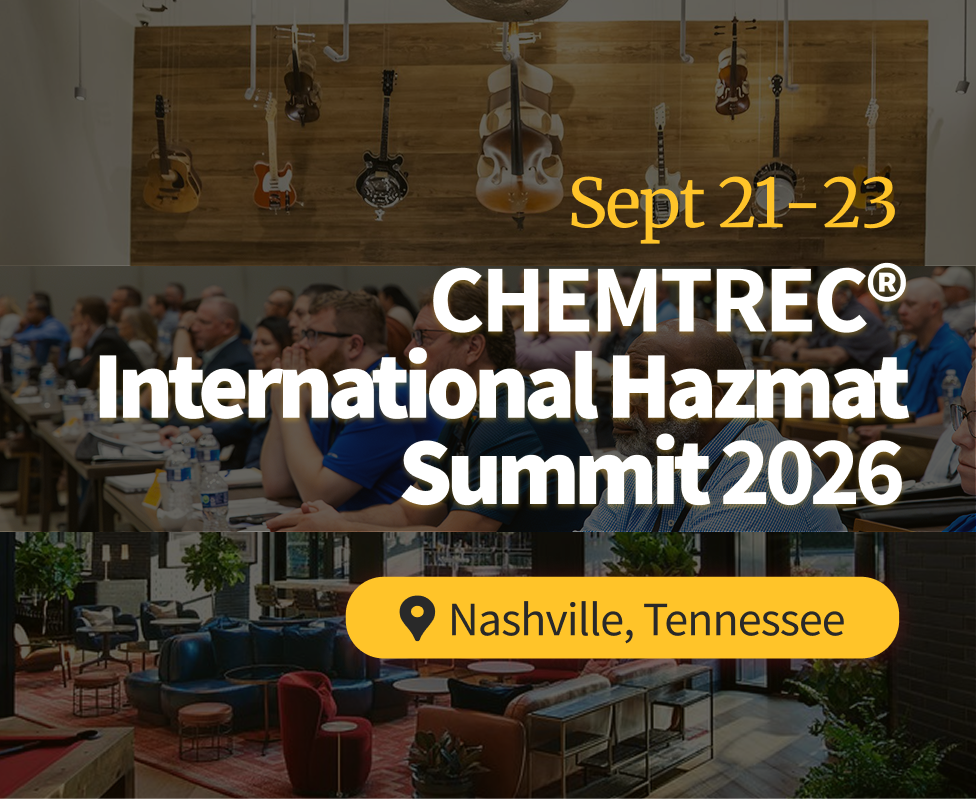
WAXAHACHIE, TX — September 16, 2026 — Americase International, a provider of mission-critical protection, testing and dangerous goods compliance solutions, today announced that Mike Pagel, Senior Consultant at HazMat Safety Consulting (HSC), an Americase International company, will present at the CHEMTREC International Hazmat Summit, September 21–23 at Virgin Hotels Nashville in Nashville, Tennessee.
Hosted by CHEMTREC, the Summit convenes emergency responders, hazmat team leaders, shippers, carriers and EHS and compliance professionals for three days of sessions on preparedness, response and regulatory change. Pagel’s presentation, “On-Site Lithium Battery Storage Standards: Navigating Risks, Prevention Strategies, and the Regulatory Gap,” is part of the Summit’s Hazmat Preparedness and Safety, Risk & Readiness track.
Unlike transportation, where lithium batteries are subject to established dangerous goods requirements under 49 CFR and international modal frameworks such as the International Air Transport Association (IATA) Dangerous Goods Regulations and the International Maritime Dangerous Goods (IMDG) Code, on-site storage requirements can involve a combination of adopted fire codes including newer lithium battery storage provisions in the 2024 International Fire Code, NFPA standards, insurer requirements and determination by authorities having jurisdiction (AHJs), rather than a single, transport-style regulatory framework.
Battery deployment is also accelerating globally. According to the International Energy Agency, 108 GW of new battery energy-storage capacity was deployed worldwide in 2025, 40% more than in 2024, while total installed capacity reached eleven times its 2021 level. That growth reflects the broader expansion of battery technologies across energy, transportation and other sectors—putting greater focus on how batteries are transported, stored, handled and protected throughout their lifecycle. The regulatory landscape is continuing to evolve. The 2024 International Fire Code introduced dedicated requirements for lithium-ion and lithium-metal battery storage, while NFPA 800, a forthcoming Battery Safety Code intended to address hazards across the battery lifecycle—including warehouse storage—remains under development.
“Transportation has a mature, highly prescriptive regulatory framework. On-site storage is more fragmented,” said Mike Pagel, Senior Consultant at HazMat Safety Consulting. “Facilities may have to navigate fire codes, standards, insurer requirements and local interpretations depending on what they are storing and where. Waiting for every requirement to become perfectly aligned isn’t a safety strategy.”
Featured Presentation
On-Site Lithium Battery Storage Standards: Navigating Risks, Prevention Strategies, and the Regulatory Gap
Hazmat Preparedness and Safety, Risk & Readiness track, September 21, 1:30-2:00 p.m.
Pagel will walk through how battery hazards can escalate in storage environments, where conventional emergency plans may fall short and what facilities can do now to strengthen risk assessment, storage practices and hazmat readiness. Key topics will include:
- Primary risk pathways for battery systems, including thermal runaway, off-gassing and secondary fires in on-site storage and fixed-facility settings
- The risks created by fragmented on-site lithium battery storage requirements and what they mean for facilities and response team
- Practical prevention, detection and mitigation strategies that reduce both the likelihood and the severity of a battery incident
- Integration of battery hazards into existing hazmat preparedness frameworks, and the updates traditional emergency plans need
- Actionable next steps for risk assessment, storage configuration and readiness protocols
“Traditional emergency plans aren’t always designed around the behavior of a lithium-ion battery event,” said Pagel. “Thermal runaway can generate intense heat and flammable gases, propagate to adjacent cells and create the potential for reignition. Once teams understand those pathways, they can make much better decisions about detection, spacing, mitigation and response.”
Who Should Attend
The session is designed for EHS, safety and compliance professionals; emergency response coordinators and hazmat teams; facility and operations managers overseeing warehouses, distribution centers and battery storage sites; and risk, insurance and corporate safety leaders evaluating emerging battery exposures.
Speaker
- Mike Pagel, Senior Consultant, HazMat Safety Consulting — A dangerous goods and hazmat safety expert specializing in lithium battery transportation, on-site storage and regulatory compliance. Pagel began his regulatory career at PHMSA’s Hazardous Materials Information Center, where he responded to thousands of inquiries involving the Hazardous Materials Regulations and worked alongside PHMSA Rulemaking, Approvals & Permits and Technical staff. Today, he advises organizations on transportation and storage compliance, special permits, SOPs and evolving battery safety requirements.
Event Details
Event: CHEMTREC International Hazmat Summit, hosted by CHEMTREC
Dates: September 21–23, 2026
Session: September 21, 1:30–2:00 p.m.
Location: Virgin Hotels Nashville, 1 Music Square West, Nashville, TN 37203
Registration and the full agenda are available at secure.chemtrec.com/cihs. For details on Americase International’s participation, visit the event page.
Frequently Asked Questions
Q: What is the CHEMTREC International Hazmat Summit?
A: A three-day summit hosted by CHEMTREC, held September 21–23, 2026, at Virgin Hotels Nashville in Nashville, TN. It brings together emergency responders, hazmat team leaders, shippers, carriers and EHS and compliance professionals for sessions on preparedness, response and regulatory change across the dangerous goods lifecycle.
Q: Who from Americase International is speaking, and what will he cover?
A: Mike Pagel, Senior Consultant at HazMat Safety Consulting, an Americase International company, presents “On-Site Lithium Battery Storage Standards: Navigating Risks, Prevention Strategies, and the Regulatory Gap” on September 21, 1:30–2:00 p.m., in the Summit’s Hazmat Preparedness and Safety, Risk & Readiness track. The session covers primary risk pathways for stored battery systems, the effects of fragmented on-site storage requirements, practical prevention and mitigation strategies, integrating battery hazards into hazmat preparedness plans, and next steps for risk assessment and storage configuration.
Q: Why does on-site lithium battery storage regulation lag behind transportation rules?
A: Transportation is governed by an established, prescriptive framework under 49 CFR and international modal rules such as the IATA Dangerous Goods Regulations and the IMDG Code. On-site storage has no equivalent single framework — facilities instead navigate a combination of adopted fire codes (including new lithium-ion and lithium-metal battery storage provisions in the 2024 International Fire Code), NFPA standards, insurer requirements and determinations by local authorities having jurisdiction (AHJs).
Q: How fast is battery storage deployment growing?
A: According to the International Energy Agency, 108 GW of new battery energy-storage capacity was deployed worldwide in 2025, 40% more than in 2024, and total installed capacity has reached eleven times its 2021 level. That growth is intensifying focus on how batteries are stored, handled and protected throughout their lifecycle, not just during transport.
Q: What is NFPA 800, and why does it matter for battery storage?
A: NFPA 800 is a forthcoming Battery Safety Code intended to address hazards across the full battery lifecycle, including warehouse storage. It remains under development, which is part of why on-site storage requirements are currently drawn from a mix of fire codes, existing NFPA standards, insurer requirements and AHJ determinations rather than one unified standard.
Q: Who should attend this session?
A: EHS, safety and compliance professionals; emergency response coordinators and hazmat teams; facility and operations managers overseeing warehouses, distribution centers and battery storage sites; and risk, insurance and corporate safety leaders evaluating emerging battery exposures.
Q: What are the primary risk pathways for lithium batteries in on-site storage?
A: Pagel’s session identifies thermal runaway, off-gassing and secondary fires as the primary risk pathways in on-site and fixed-facility storage settings. Thermal runaway in particular can generate intense heat and flammable gases, propagate to adjacent cells, and create the potential for reignition — behavior that traditional emergency plans aren’t always designed around.
About Americase International
Americase International is a fully integrated enterprise that shapes and delivers protection, containment, and mitigation solutions across the lifecycle of high-value and dangerous goods — through regulatory enhancement and education; expert consultation; risk reduction; customized testing and validation; specialized training; and superior protective packaging. Combining HazMat Safety Consulting, Americase, and Fulcrum Testing, the company serves leaders across aerospace, defense, energy, medical, technology, and other highly regulated industries. With 200+ years of combined regulatory experience and over 40 years in engineering, testing, and manufacturing innovation, Americase International delivers proven solutions where failure is not an option. For more information, visit AmericaseInternational.com.