Article Summary
New battery chemistries are entering the supply chain faster than most compliance programs can adapt to them, and that gap is where risk concentrates. John Redman, Chief Operating Officer at Americase International and a delegate to the United Nations Sub-Committee of Experts on the Transport of Dangerous Goods, explains what’s changing at the classification level — separate UN entries now apply to sodium-ion batteries alongside the existing lithium-ion scheme, which forces updates across shipping templates, documentation, and team training. Drawing on his direct seat at the table where these regulations are written, Redman lays out five strategic recommendations for building a mission-critical compliance program: flexible, high-performance containment; data-driven risk assessment; validated testing partnerships; active engagement with industry bodies like COSTHA and PRBA; and holistic integration of compliance, engineering, and training. The article closes with how Americase International’s end-to-end platform — engineering, consulting, and testing — is built to adapt alongside these emerging chemistries.
The Accelerating Pace of Change in Dangerous Goods Protection
The accelerating pace of change in battery technology creates real obstacles in the supply chain. New chemistries bring new classification schemes — a sodium-ion battery classification scheme, with its own UN entries, now exists separately from the lithium-ion battery scheme. The UN entries governing how each has to be declared in transport are no longer the same.
That separation creates concrete work: every system has to be updated, every shipping template has to be updated, documentation and retention practices need to be updated, and every team member handling these items needs to be trained on what those UN entries actually are and how they’re controlled. But inside that challenge is a real opportunity — a forcing function to evaluate every battery moving through the supply chain correctly: is it end-of-life, potentially damaged, potentially defective, or no longer meeting the UN 38.3 certification that proves it’s safe for transport? Getting that evaluation right, consistently, is where a lot of the actual risk reduction happens.
A View from Inside UN Rulemaking
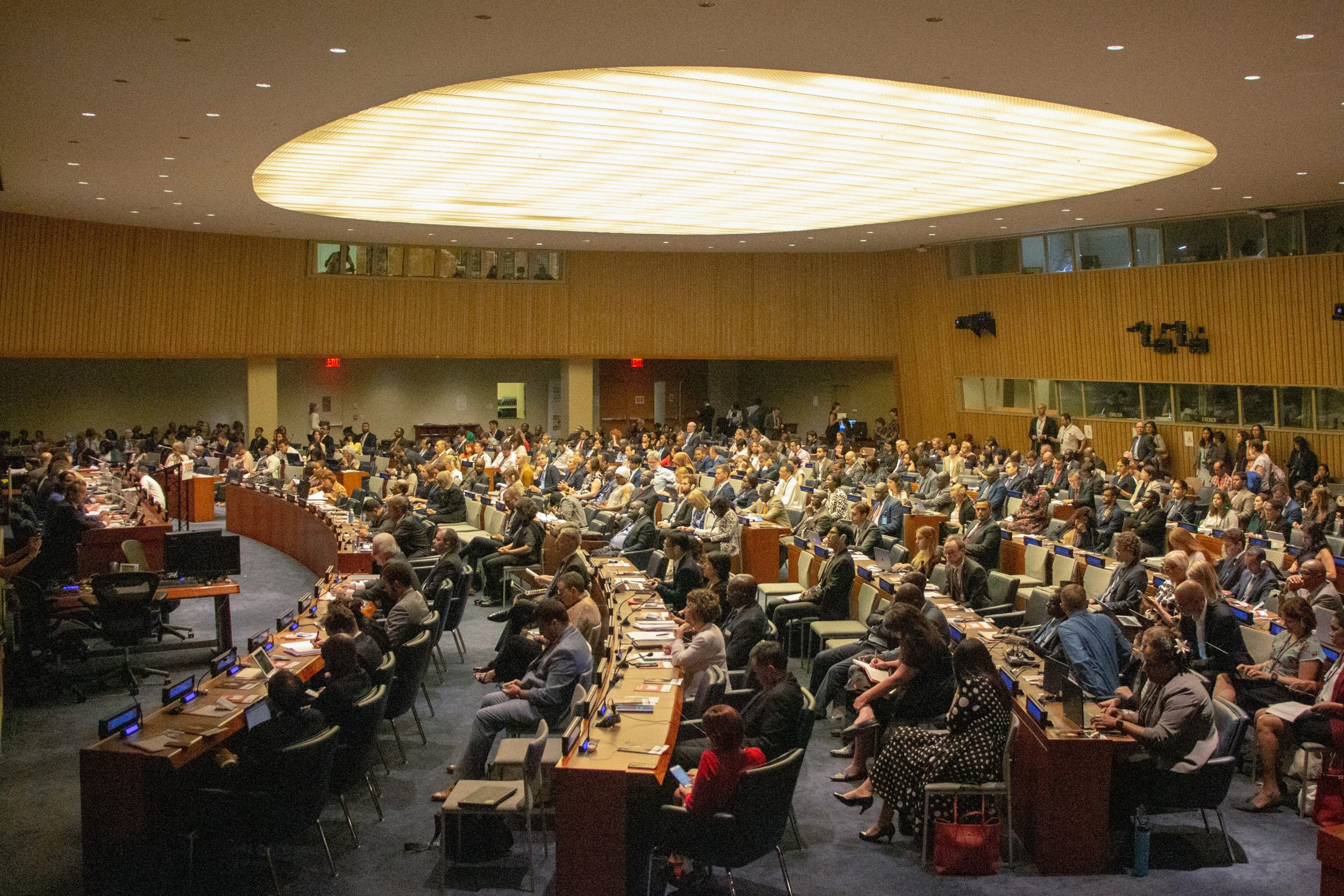
Serving as a delegate to the United Nations Sub-Committee of Experts on the Transport of Dangerous Goods has been an extreme honor. There are only a handful of people globally who get to participate in those meetings, and an even smaller percentage who, through their relationships and expertise, can actually help influence or advise on what the regulations become.
One thing worth understanding: “dangerous goods” and “hazardous material” are synonymous terms. The US refers to these materials as hazardous material; the rest of the world calls them dangerous goods. But wherever you are, the regulations governing their transport start at the United Nations level. Understanding how those regulations come to be, and what their underlying intent actually is, is critical to building a compliance program that genuinely supports that intent — rather than one that’s just checking boxes against the letter of a rule.
Strategic Recommendations for Mission-Critical Operations
1. Adopt flexible, high-performance containment solutions. Look at the risk of the items moving through your supply chain and make sure your containment doesn’t just meet the regulatory minimum — it should protect the brand, the people, and the item in the best way possible for the item’s actual current state. That last part matters more than it sounds: a battery that was safely packaged for outbound shipment is very likely damaged, defective, or otherwise abused by the time it’s being recovered from the field. Just because it shipped one way doesn’t mean it can be transported the same way coming back.
2. Implement data-driven risk assessments. Understand the actual risk of the item you have, understand how it’s being transported, and make sure you’re properly assessing and mitigating that risk through the controls you put in place — not assuming yesterday’s assessment still applies.
3. Build strong testing and validation partnerships. There are a lot of packaging claims and a lot of solutions on the market. If you’re using one you haven’t tested and validated yourself, you don’t actually have the protection you think you have — you have a claim. Developing real testing partnerships is essential for mission-critical operations.
4. Maintain active engagement with COSTHA, PRBA, and other industry bodies. Being involved gives you access to more than expert commentary — it gives you benchmarking. How is the automotive industry interpreting a given regulation? How are chemical companies or battery manufacturers applying it? That context is critical to moving forward with specific, defensible controls in your own operational environment.
5. Integrate compliance, engineering, and training holistically. Build a compliance division with the expertise to understand what regulations mean at a global level, interpret them into programs, standards, policies and procedures, and develop training from those same standards — moving all of it through the organization as one connected system rather than three disconnected functions.
How Americase International Future-Proofs Safety Programs
Americase International has the unique ability to provide an end-to-end platform combining engineering — the development of containment systems — with consulting from the highest levels of expertise in the dangerous goods community, including support building out a client’s own compliance division, and testing through our own labs. That combination lets us adapt alongside emerging lithium battery technology, emerging sodium-ion battery technology, and whatever transportation challenge or operational risk comes with them. Few organizations are positioned with that same combination of preeminent regulatory expertise, in-house testing, and containment engineering under one roof.
By John Redman, Chief Operating Officer, Americase International
FAQ Section
New chemistries like sodium-ion now carry their own separate UN classification and entries, distinct from lithium-ion. That means shipping templates, documentation and retention processes, and team training all need to be updated in parallel with whatever compliance systems already exist for lithium-ion batteries.
It’s the United Nations body where dangerous goods transport regulations are developed and debated. Only a small number of people globally serve as delegates, and an even smaller number have the relationships and expertise to directly influence or advise on the regulations that come out of it.
Yes, the terms are synonymous. The US refers to these regulated items as hazardous material, while the rest of the world refers to them as dangerous goods — but the underlying transport regulations for both start at the United Nations level.
A battery that was safely packaged for outbound shipment has likely become abused, damaged, or defective by the time it’s being recovered — its state of charge and physical condition have changed. Containment solutions need to reflect that current state, not the battery’s condition at the time it originally shipped.
Adopt flexible, high-performance containment solutions built for an item’s actual current state; implement data-driven risk assessments; build strong testing and validation partnerships; maintain active engagement with industry bodies like COSTHA and PRBA; and integrate compliance, engineering, and training holistically across the organization.
Through an end-to-end platform that combines containment engineering, consulting access to top-level dangerous goods regulatory expertise, and in-house testing labs — allowing the platform to adapt alongside emerging chemistries like sodium-ion as they enter the supply chain.