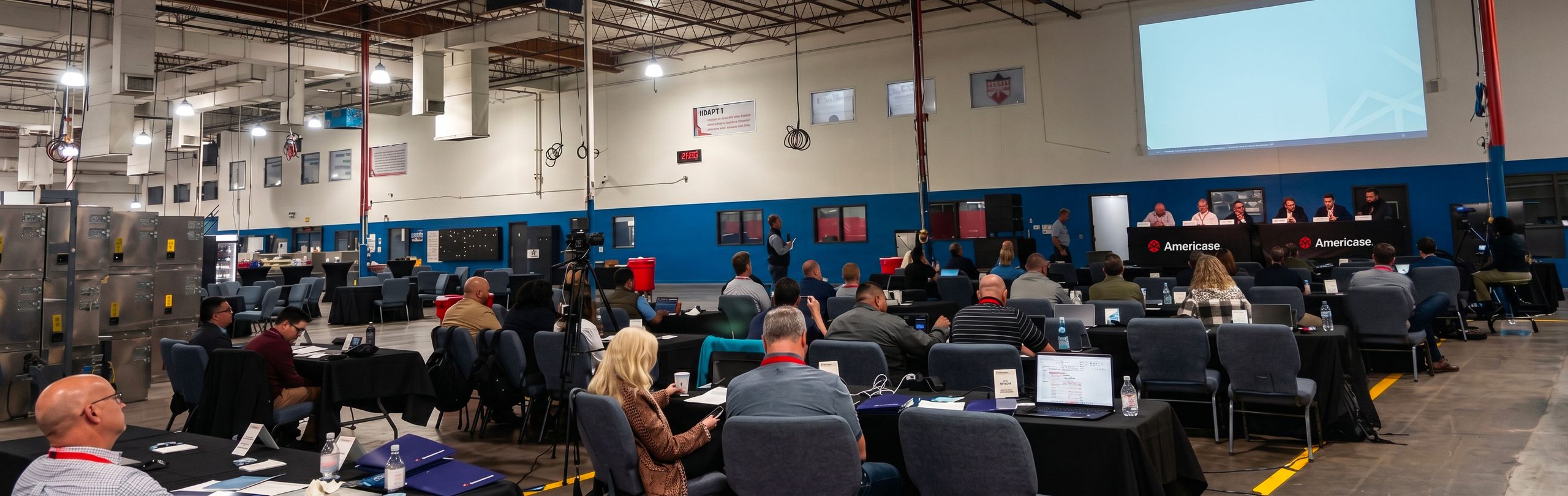
Battery Safety, regulations, & innovation Symposium™ · Waxahachie, Texas
Safely Charging Ahead™ 2026
Two days of sessions built around the five stages of The Battery Safety Lifecycle™, plus an afternoon spent watching batteries fail on purpose. The program is designed for people who already handle batteries somewhere in their operation, so there’s no primer on lithium hazards and no introduction to transport requirements.
EVENT DETAILS
Thursday–Friday, October 22–23, 2026
Waxahachie Civic Center · Waxahachie, Texas
Intermediate to expert
$575 per person · at cost, in support of the people who do this work
THE FRAMEWORK
Built on The Battery Safety Lifecycle™
Battery safety usually gets handled as a transport problem, or a storage problem, or a disposal problem. The obligations change at every handoff, and that’s where operations get caught short. The program follows all five stages, stages one and two on Thursday, three through five on Friday.
classify
Testing, Classification & Qualification
What is it, really — and how much energy will it release, how fast?
contain
Transport & Containment
How does it move — legally, and without becoming the incident?
store
Storage & Facility Readiness
Where does it live — and is my building actually rated for it?
respond
In-Service Use & Emergency Response
Who handles it when it fails — and what happens from the first minute to the end of quarantine?
retire
Retirement & Recovery
Where does it end up — and where does my liability actually stop?
WHY THIS PROGRAM EXISTS
Three positions the program defends
POINT OF VIEW ONE
Regulation is behind the investment
Money is going into battery deployment — data centers, grid storage, mobility, ground support — faster than the codes and classification schemes can keep up. If your compliance program is waiting for the rule to show up, it’s already behind the asset you installed.
POINT OF VIEW TWO
You don’t know what you don’t know until you test it
Calling something a lithium battery tells you almost nothing about how it will behave if it fails. Form factor, chemistry and state of charge produce different hazards, and the differences aren’t intuitive — a smaller cell isn’t automatically a smaller problem. The only way to know what you’re holding is to measure it.
POINT OF VIEW THREE
Containment, not just compliance
Passing a test isn’t the same as containing an event. The regulations set a threshold a package has to clear under defined conditions. They don’t ask whether it will hold a real failure in a real facility, at a real state of charge. An operation can be compliant at every stage and still be exposed.
THE PROGRAM
Two days, five stages
Thursday covers what a battery is and how it moves, then proves it at the Americase facility. Friday covers where it lives, what happens if it fails, and how it leaves your custody. Session topics are settled; individual speakers are added as they confirm.
Day One — Thursday, October 22
Stages 1–2
7:30 – 8:15am
Registration and breakfast
8:15 – 8:35am
Welcome and Framing
8:35 – 9:05am
Opening Keynote — Regulation Is Behind the Investment
The gap between deployment capital and regulatory adaptation, and why the burden lands on the operator rather than the rulebook.
Stage 1 — Testing, Classification & Qualification
9:05 – 10:05am
One Question, Every Chemistry: Hazard-Based Classification and What It Changes
The UN informal working group’s classification work — why it reaches beyond transport into storage and incident handling, likely transition periods, and what suppliers will start sending customers. Covers current qualification testing, the proposed characterization testing regime, and situates UN 38.3, NFPA and UL testing inside qualification. Lithium-ion, lithium metal, polymer, emerging solid-state and sodium-ion.
10:05 – 10:20am
Break
Stage 2 — Transport & Containment
10:20 – 11:05am
Panel — Transportation: Emerging Challenges & Regulatory Update
Not an introduction to transport requirements. A curated set of the challenges arriving now: how the damaged-defective-recalled (DDR) definition may change, how UN 38.3 requirements may change, moving batteries off islands, state-of-charge limitations, and the hybrid vehicle classification gap now allowing very large packs to fly at full charge.
11:05 – 11:50am
Keynote — Compliant Versus Contained
What the job actually requires versus what beats the regulation. How chemistry and thermal runaway behaviour determine whether packaging or storage can do the work, what the test data says at cell, package and cabinet level, and where field failures originate.
11:50am – 12:35pm
Lunch
Seated by lifecycle stage of primary interest.
12:35 – 1:25pm
Demonstration briefing, then coach transport to the Americase facility
Live Demonstration Block
1:30 – 4:15pm
Live Battery Safety Testing Demonstrations
Nearly three hours of back-to-back testing, with previously tested articles of the same configurations displayed alongside each live event so you see before and after in real time. Full detail below.
4:15 – 4:45pm
Return transfer
5:00 – 7:00pm
Networking reception
Day Two — Friday, October 23
Stages 3–5
8:00 – 8:45am
Registration and breakfast
Stage 3 — Storage & Facility Readiness
8:45 – 10:00am
Is Your Building Actually Rated for What You Put In It?
Fire code and storage requirements, working with the authority having jurisdiction, permitting realities, and the segregation decisions operators get wrong — paired with an insurance view of what carriers actually inspect for. Includes a segment on hazard modeling as an alternative to full thermal load testing, and the standards work now underway to govern the modeling itself.
Stage 4 — In-Service Use & Emergency Response
10:00 – 11:15am
Panel — Initial Response and Quarantine: What Actually Happens
The full arc: facilities preparedness and what trained staff do in the first minutes, the standard operating procedures large operators have written for thermal events, the response team managing the ongoing situation, the 24-to-48-hour quarantine, and then the aftermath — investigation, forensics, insurance and liability.
11:15 – 11:30Am
Break
Stage 5 — Retirement & Recovery
11:30 – 12:45pm
Panel — Recalls, Returns & Recycling: Where the Liability Stops
The Consumer Product Safety Commission’s (CPSC) role in voluntary recalls and what “dispose of per local regulation” produces in practice; the recall playbook now in development with the waste industry; the Environmental Protection Agency (EPA) and the Department of Transportation (DOT) gray area where a damaged battery moving as waste loses universal waste relief and must travel fully regulated; waste stream leakage and truck fires; reverse logistics; recycler capability; and chain-of-custody documentation.
12:45 – 1:45pm
Lunch
1:45 – 2:15pm
Insurability and the Fire Code
Underwriting expectations, what carriers now require, and how insurance is moving faster than regulation in forcing compliance.
2:15 – 2:30pm
Break
2:30 – 3:30pm
Panel — The Frontier: What Has Hazards and No Rules Yet
Not a survey of new chemistries. A forensic and test data view of how differently batteries behave within the lithium family and beyond it, from pouch cells through energy storage systems — and why a manufacturer cannot build its way out of regulation, though a genuinely safer chemistry will test into more favorable hazard classification.
3:30 – 4:00pm
Closing: The Custody Map™
Complete the five-stage by four-condition-state self-assessment against your own operation, and leave with a specific list of your own exposures.
THE REASON PEOPLE COME BACK
Live demonstrations, not slides about them
Attendees are bused to the Americase facility for one consolidated window of live testing. Everything is pre-staged and runs back to back — one article is wheeled into position while the last one is still smoldering. Previously tested articles of the same configuration sit alongside each live event, so you see the before and after together.
Hazard classification testing
The classification test the industry is about to need, run ahead of adoption.
Chemistry comparison
Lithium-ion, lithium metal and sodium-ion side by side. The evidence answer to “aren’t alternative chemistries safer?”
Cell-to-cell propagation and vent gas
How failure travels, and what comes out of it.
Packaging comparison
Compliant containment against common non-compliant practice, at full scale.
Large format thermal runaway
Cabinet-level containment under a full-scale event.
Damaged battery handling
Responders working a live damaged article.
Final test selection is subject to article availability and site conditions.
WHO THIS IS FOR
Built for practitioners, not beginners
The program assumes working knowledge and starts from there. It’s also deliberately broad about where responsibility sits, because the handoffs between roles are usually where things go wrong.
OPERATIONS & EHS
Data center and energy storage operators
EHS and safety managers
Facilities and site leadership
Emergency response teams
COMPLIANCE & LOGISTICS
Dangerous goods and compliance managers
3PLs, carriers and vessel operators
Reverse logistics and recall teams
Packaging engineers
RISK & THE WIDER FIELD
Insurers, underwriters and brokers
Recyclers and waste handlers
Regulators and code officials
Researchers and forensic engineers
PRESENTING
Who you’ll hear from
Sessions are led by practitioners from across Americase International’s companies. Additional speakers, including outside regulators, operators and insurers, are announced as they confirm.
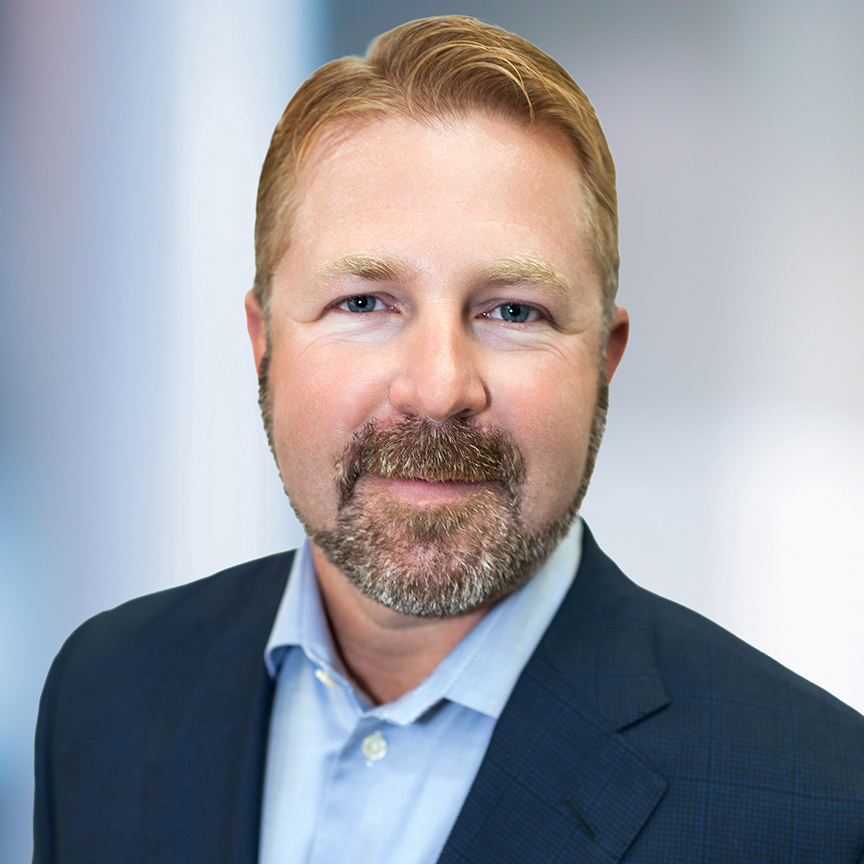
Robby Kinsala
Chief Executive Officer, Americase International
Opening keynote: Regulation is behind the investment
Robby Kinsala is the Chief Executive Officer of Americase International, where he leads the company’s strategic vision, innovation roadmap, and global growth. A natural problem solver with deep operational insight, Robby has transformed Americase from a small, family-run manufacturer into an enterprise-level organization serving customers worldwide—including a significant presence among Fortune 50 companies and nearly every major commercial airline.
Robby’s connection to Americase began early. At just nine years old, he helped build the company’s first dedicated facility, and throughout his teenage years he learned the business from the ground up—working every station across every product line. While earning his BBA in Marketing from the University of North Texas, he continued contributing to the business, managing advertising initiatives and gaining hands-on experience in operations. In the early 2000s, he assumed leadership roles as Plant Manager and Office/Accounting Manager, strengthening the company’s operational foundation.
Recognizing opportunities for expansion, Robby focused on research and development, regulatory engagement, and securing critical certifications—strategic moves that enabled Americase to enter new vertical markets and establish itself as an industry leader in mission-critical protective solutions. In 2014, he formally stepped into the role of President & CEO, accelerating growth while reinforcing the company’s reputation for engineering excellence, regulatory leadership, and protection without compromise.
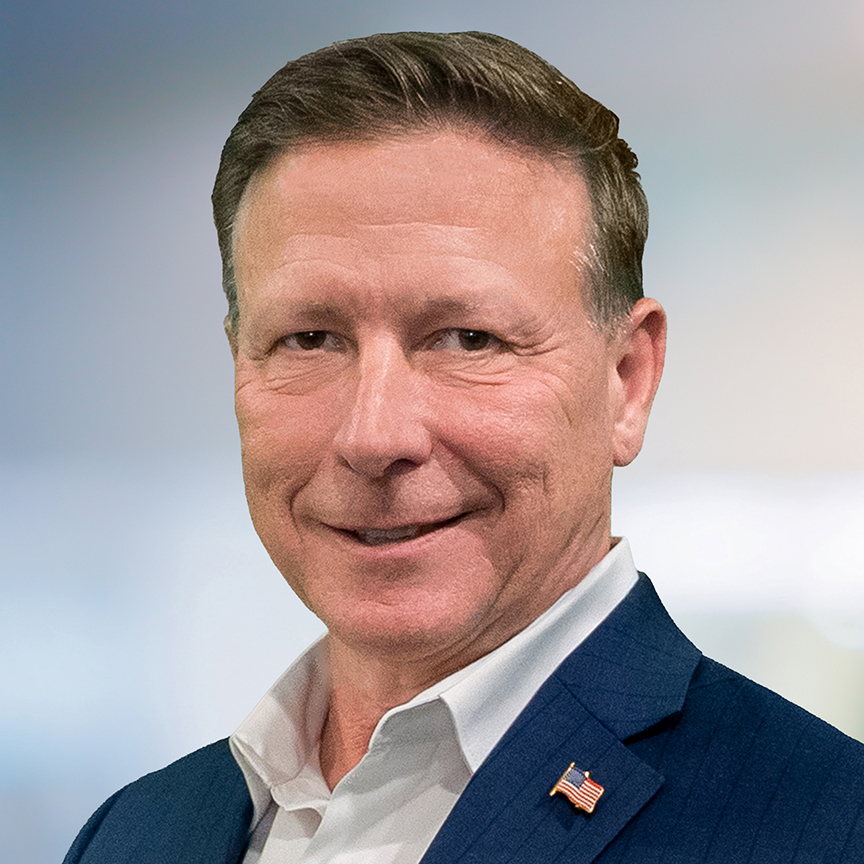
Duane Pfund
Senior Consultant, HazMat Safety Consulting
One Question, Every Chemistry: Hazard-Based Classification and What It Changes
Duane Pfund brings more than 35 years of hazardous materials transportation safety expertise to his role as Senior Consultant at HazMat Safety Consulting. He advises clients on complex dangerous goods (DG) compliance matters, including customized training development, compliance assessments, regulatory interpretation, special permits and approvals, and strategic program design. His guidance helps organizations manage risk, strengthen internal controls, and align with evolving domestic and international regulatory requirements.
Prior to joining HazMat Safety Consulting, Duane spent 25 years with the Pipeline and Hazardous Materials Safety Administration (PHMSA) at the U.S. Department of Transportation. For 20 of those years, he served as Director of the Office of Hazardous Materials Safety International Program, leading international and national regulatory initiatives and overseeing policy implementation. He also held senior leadership roles as Acting Deputy Associate Administrator for Hazardous Materials Safety and Acting Director of the Sciences, Engineering and Research Division.
Internationally, Duane represented the United States at the highest levels of dangerous goods regulatory development. He led the U.S. delegation to the United Nations Sub-Committee of Experts on the Transport of Dangerous Goods for 20 years, serving as Chairman for the final decade of his tenure. He also represented the U.S. for 10 years on the ICAO Dangerous Goods Panel and led delegations at the International Maritime Organization and the European Joint Meeting of the RID/ADR/ADN. In addition, he served as Designated Federal Official for the Lithium Battery Air Safety Advisory Committee, helping guide U.S. policy on one of the industry’s most critical and high-profile safety issues. He is a contributing author and technical advisor to the Journal of Hazmat Transportation.
A graduate of Michigan State University in Packaging Engineering and a participant in the Department of the Interior’s Senior Executive Service Candidate Development Program, Duane combines technical expertise, regulatory leadership, and international diplomacy. His depth of experience enables him to deliver practical, defensible solutions that help clients remain compliant while operating efficiently in a complex global regulatory environment.
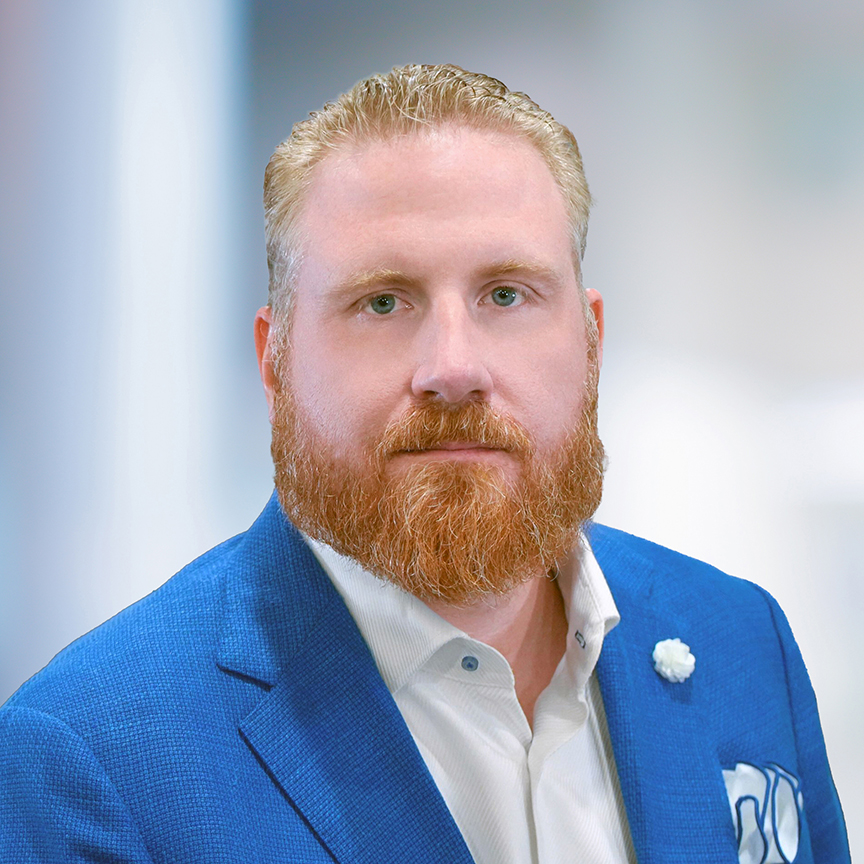
Chris Egloff
Chief Revenue Officer, Americase International
keynote: Compliant versus contained
Chris Egloff serves as Chief Revenue Officer at Americase International, where he leads high-impact initiatives for some of the company’s largest and most complex clients. He oversees strategic execution while serving as a trusted authority on regulatory navigation, containment strategy, and compliant transport solutions.
At the core of Chris’s role is advocacy—ensuring customers have a knowledgeable visionary partner who understands both the technical and regulatory landscape of dangerous goods. He works closely with clients to align engineering innovation, safety performance, and compliance requirements—delivering protection without compromise.
With more than 25 years of sales and consulting experience, Chris developed a strong foundation in consultative sales, partnership development, and long-term customer success. Across industries, he has consistently prioritized integrity, product excellence, and relationship-driven collaboration—principles that continue to guide his work today.
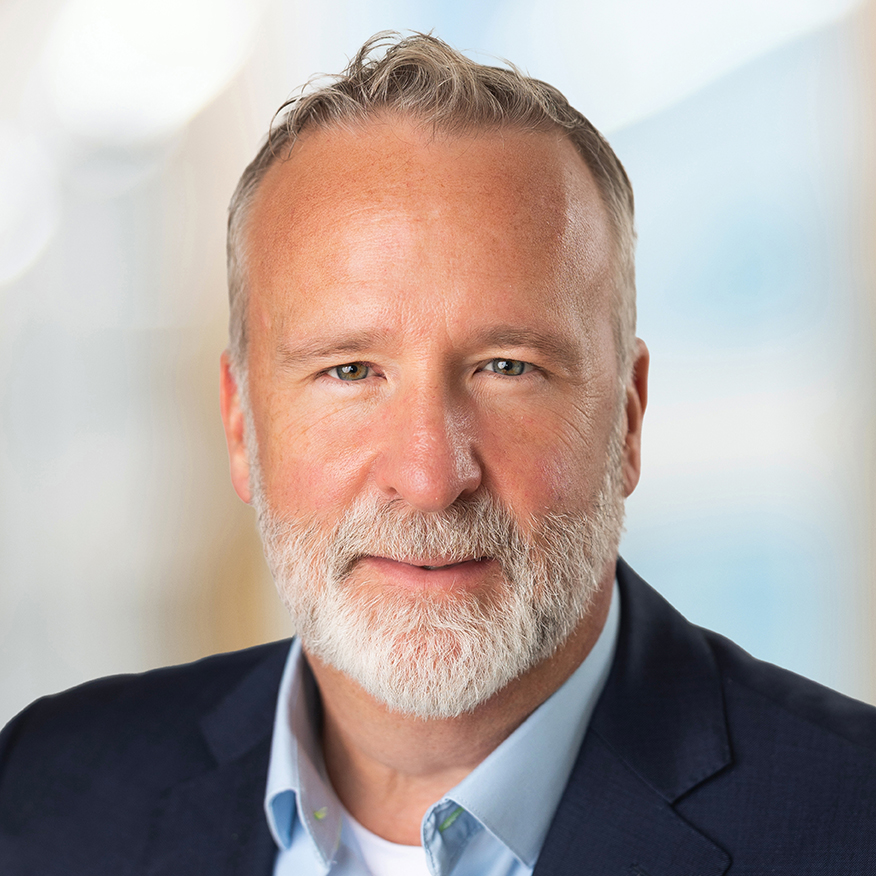
Ryan Paquet
President, Americase International
Transportation: emerging challenges & regulatory updates
Ryan serves as President of HazMat Safety Consulting, bringing more than 20 years of leadership experience in hazardous materials transportation safety, regulatory policy, and international standards development. He provides clients with strategic insight grounded in firsthand government leadership—helping organizations navigate complex regulatory frameworks with clarity and confidence.
Prior to joining HazMat Safety Consulting, Ryan served for a decade as Director of the Approvals and Permits Division at the Pipeline and Hazardous Materials Safety Administration (PHMSA) within the U.S. Department of Transportation. In that role, he led the evaluation and issuance of special permits and approvals, coordinating with domestic agencies, foreign governments, and international regulatory bodies. His leadership spanned high-profile regulatory actions, global product recalls, national emergency responses, and the safe integration of emerging technologies into the U.S. marketplace.
Ryan previously served as PHMSA’s Assistant Director of International Standards, representing the United States as part of its delegation to the UN Sub-Committee of Experts on the Transport of Dangerous Goods and to the International Maritime Organization. He has led numerous international delegations and diplomatic engagements that resulted in meaningful advancements to global dangerous goods transportation standards.
Recognized throughout the dangerous goods community for his ability to bridge regulatory, governmental, and industry perspectives, Ryan helps clients anticipate risk, secure regulatory approvals, and implement compliant, defensible safety strategies.
Ryan is a Licensed Professional Geologist and holds a Bachelor of Science from the University of Connecticut and a Master’s degree in Organizational Development and Leadership from Fielding University. He resides in Rhode Island with his wife and two children.
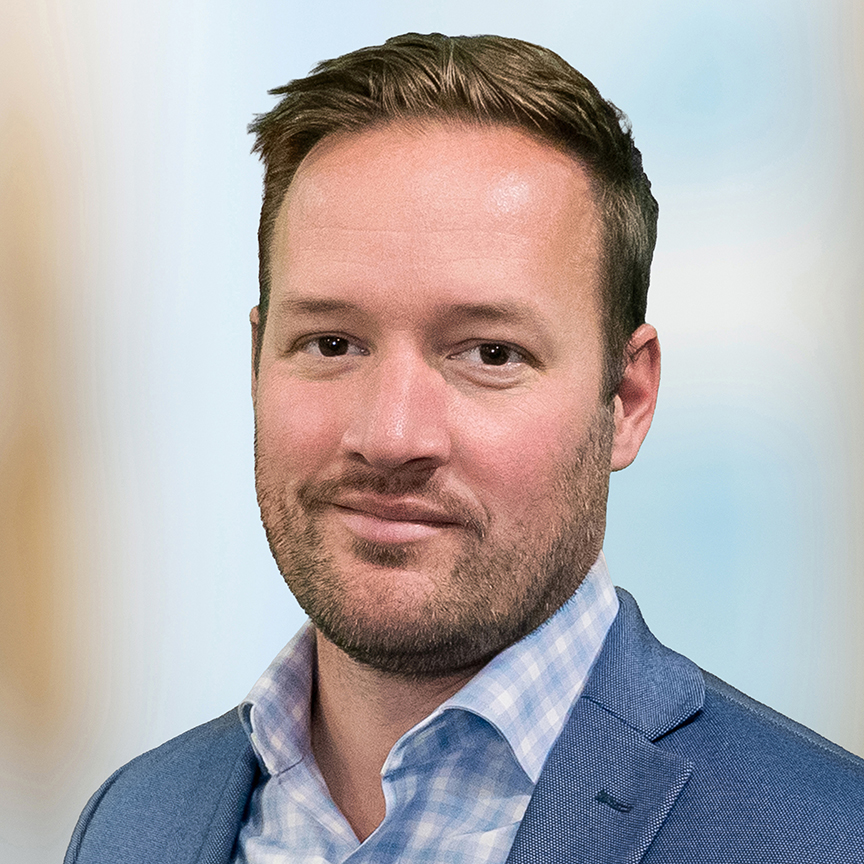
Mike Pagel
Senior Consultant, HazMat Safety Consulting
initial response & quarantine: what actually happens
Mike Pagel serves as Senior Consultant at HazMat Safety Consulting, where he partners with organizations to strengthen and optimize their dangerous goods transportation programs. His work spans customized regulatory training development, on-site storage and transportation compliance audits, special permit and approval support, standard operating procedure (SOP) development, and ongoing strategic consulting.
Mike supports a diverse client base—including medical device manufacturers, e-commerce operations, cosmetics suppliers, third-party logistics providers and carriers, electric vehicle manufacturers, packaging companies, and consumer electronics firms. He helps these organizations navigate complex dangerous goods regulations with practical, defensible solutions that align compliance obligations with operational realities.
Mike began his regulatory career in 2012 at the Hazardous Materials Information Center (HMIC) within the Pipeline and Hazardous Materials Safety Administration (PHMSA) at U.S. Department of Transportation headquarters in Washington, D.C. During his tenure, he responded to thousands of inquiries related to the Hazardous Materials Regulations (HMR), working closely with PHMSA’s Rulemaking, Approvals & Permits, and Technical staff. This frontline regulatory experience provided him with deep insight into both the letter and the intent of the regulations—an advantage he now leverages on behalf of his clients.
Through disciplined analysis, regulatory fluency, and a consultative approach, Mike helps organizations build compliant, efficient, and resilient dangerous goods programs.
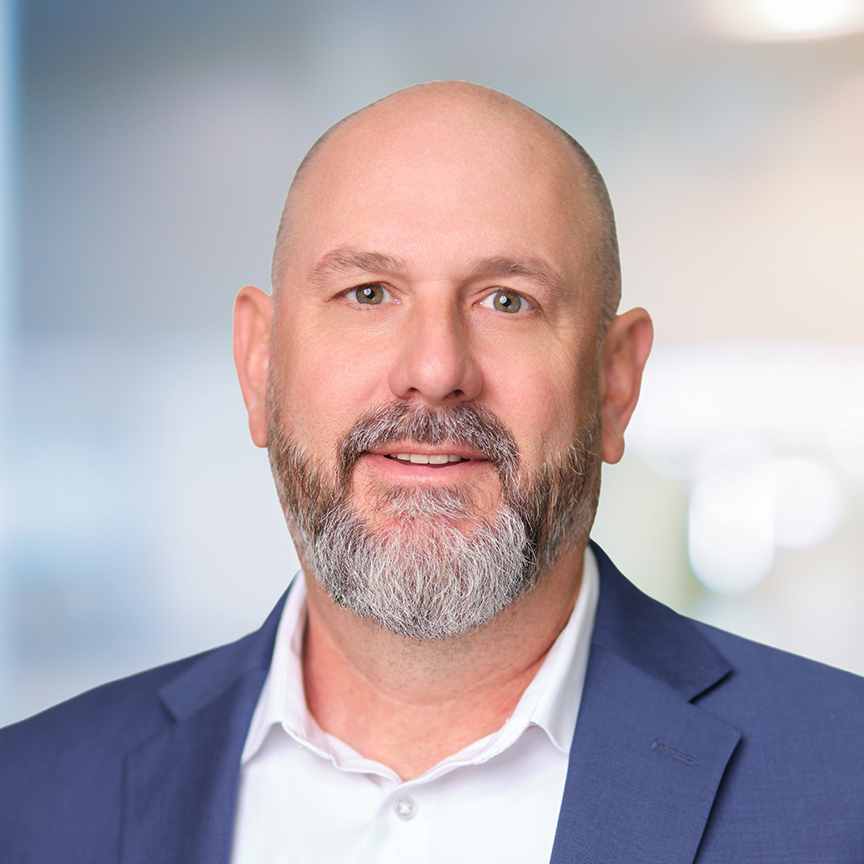
John Redman
Chief Operating Officer, Americase International
recalls, returns, & recycling: where the liability stops
John Redman is Chief Operating Officer at Americase International. He provides operational leadership and strategic oversight across the Americase portfolio—including Americase International, Hazmat Safety Consulting, and Fulcrum Testing—driving excellence in lithium battery safety and hazardous materials solutions.
With more than 30 years of experience in the automotive industry, John previously served as Director of Global Compliance and Dangerous Goods Transportation at General Motors and as Manager of Dangerous Goods Compliance for Toyota Motor North America (TMNA). In these roles he developed, standardized, and executed enterprise-wide hazmat programs, delivered high-level regulatory guidance, and ensured the safe handling, transport, and management of dangerous goods on a global scale.
Recognized as a leading subject matter expert, John has represented the industry before numerous government agencies and organizations. He has been an active member of the Act 209 Hawaiian Working Group, Supplier Partnership, and SAE, and served as a board member of both COSTHA (Council on Safe Transportation of Hazardous Articles) and PRBA (Portable Rechargeable Battery Association). He has also participated as a delegate to the United Nations Sub-Committee of Experts on the Transport of Dangerous Goods.
John’s passion for problem solving and developing people stems from a lifelong commitment to helping others reach their potential, whether teaching a friend to swim as a child, tutoring classmates, or mentoring through church activities. He brings this same dedication to building high-performing teams and delivering mission-critical safety solutions at Americase.
Frequently Asked Questions
Questions about Safely Charging Ahead™ 2026
Safely Charging Ahead™ 2026: Battery Safety, Innovation, & Regulations Symposium™ is a two-day symposium on lithium battery safety, organized around the five stages of The Battery Safety Lifecycle™: Classify, Contain, Store, Respond, and Retire. It includes expert sessions, panel discussions, and an afternoon of live battery safety testing demonstrations.
Safely Charging Ahead™ 2026 takes place Thursday, October 22 through Friday, October 23, 2026, at the Waxahachie Civic Center in Waxahachie, Texas.
Registration is $575 per person. The event is priced at cost, in support of the people who do this work.
The symposium is built for practitioners who already carry responsibility for lithium batteries somewhere in their operation, including operations and EHS teams, compliance and logistics managers, insurers and recyclers, and regulators and forensic engineers.
No. The program is designed for an intermediate-to-expert audience. It does not include a primer on lithium hazards or an introduction to transport requirements — it’s built for people who need the next level of detail.
The Battery Safety Lifecycle™ is the five-stage framework the symposium is organized around: Classify (testing, classification & qualification), Contain (transport & containment), Store (storage & facility readiness), Respond (in-service use & emergency response), and Retire (retirement & recovery). Thursday covers stages one and two; Friday covers stages three through five.
Thursday covers stages one and two of The Battery Safety Lifecycle™: an opening keynote on why regulation is behind the investment, a session on hazard-based classification, a panel on transportation, and a keynote on compliant versus contained packaging. The afternoon is devoted to nearly three hours of live battery safety testing demonstrations at the Americase facility, followed by a networking reception.
Friday covers stages three through five of The Battery Safety Lifecycle™: a forensic review of Thursday’s test results, a session on fire code and facility readiness, panels on initial response and quarantine and on recalls, returns and recycling, a session on insurability, and a panel on emerging battery hazards. The day closes with The Custody Map™, a self-assessment attendees complete against their own operation.
Attendees are bused to the Americase facility for nearly three hours of back-to-back live testing, including hazard classification testing, a chemistry comparison across lithium-ion, lithium metal, and sodium-ion, cell-to-cell propagation and vent gas, packaging comparison, large-format thermal runaway, and damaged battery handling. Previously tested articles are displayed alongside each live event for a before-and-after comparison. Final test selection is subject to article availability and site conditions.
Confirmed speakers include Robby Kinsala (CEO, Americase International), Duane Pfund (Senior Consultant, HazMat Safety Consulting), Chris Egloff (Chief Revenue Officer, Americase International), Ryan Paquet (President, HazMat Safety Consulting), Mike Pagel (Senior Consultant, HazMat Safety Consulting), and John Redman (Chief Operating Officer, Americase International). Additional speakers, including outside regulators, operators, and insurers, are announced as they confirm.
Four panels are featured: Transportation: Emerging Challenges & Regulatory Update; Initial Response and Quarantine: What Actually Happens; Recalls, Returns & Recycling: Where the Liability Stops; and The Frontier: What Has Hazards and No Rules Yet.
The Custody Map™ is the symposium’s closing session on Friday afternoon: a self-assessment structured across the five lifecycle stages and four condition states. Attendees leave with a specific list of the exposures in their own operation.
Yes. A networking reception runs from 5:00–7:00pm on Thursday, October 22, following the live demonstration block.
Yes. Registration and breakfast run from 7:30–8:15am each morning, and lunch is provided both days.
Register online at americaseinternational.com/safely-charging-ahead. Seating is limited by the event’s demonstration transport capacity, so early registration is recommended.
The nearest airports are Dallas Love Field (DAL) and Dallas/Fort Worth International (DFW), both about 45 minutes from Waxahachie, Texas by car.
Email info@americase.com or call 888.705.4202.
Cancellation requests must be submitted in writing to info@americase.com. Registrations are cancellable and fully refundable through October 8, 2026 — two weeks prior to the event. Cancellation requests received after October 8, 2026 are not eligible for a refund.
Yes. Free parking is available on-site at the Waxahachie Civic Center.
Safely Charging Ahead™ 2026
October 22–23, 2026 at the Waxahachie Civic Center, Waxahachie, Texas. Seating is limited by demonstration transport capacity.