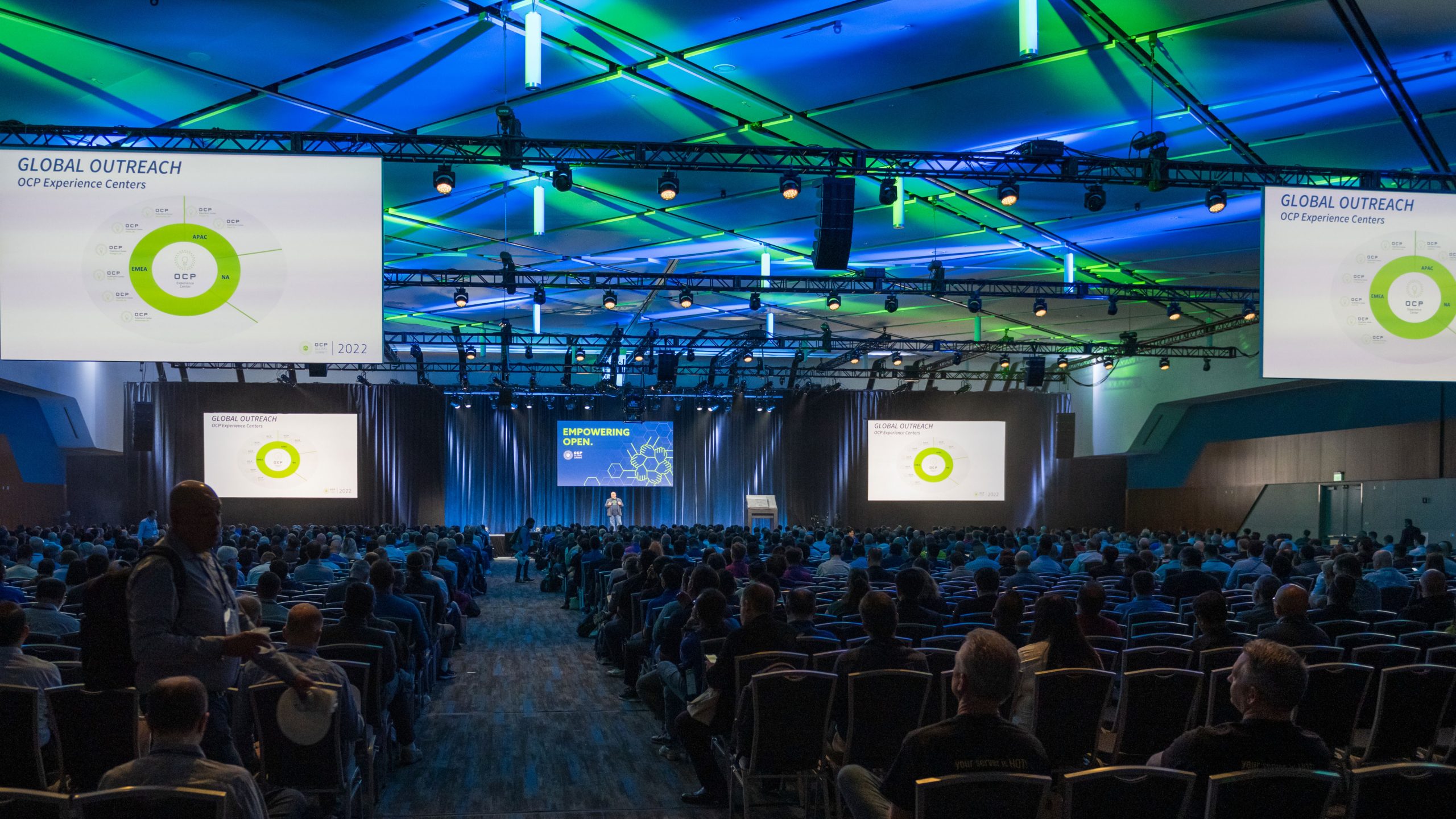
Americase International brings together experts in engineering, regulatory compliance, emergency response and hyperscale operations at OCP APAC Summit to discuss practical guidance for reducing risk across the AI data center supply chain.
Waxahachie, Texas — August 4, 2026 — Artificial intelligence is reshaping the world’s digital infrastructure at an unprecedented pace. Across Asia-Pacific, AI data center construction, high-density computing and energy storage deployments are accelerating rapidly, creating new operational challenges for organizations responsible for safely transporting, storing and deploying lithium-ion batteries throughout their operational lifecycle.
That expansion is landing directly on the physical infrastructure that powers and protects AI compute. According to Dell’Oro Group, the worldwide data center physical infrastructure market grew 28 percent year over year to $12 billion in the first quarter of 2026 — the fifth consecutive quarter of growth above 20 percent — with uninterruptible power supply revenue increasing at a high-teens rate. North America generated more than half of that revenue, while Asia Pacific is expected to accelerate through 2026 as regional vendor pipelines mature. As rack densities rise and lithium-ion chemistries displace lead-acid across backup power architectures, more stored energy will move into, through and within APAC data center facilities than at any point in the region’s history.
While lithium-ion batteries have become foundational to modern AI data centers and digital infrastructure, many organizations still address regulatory compliance, engineering, emergency preparedness and operational planning as separate functions. As AI infrastructure scales, industry leaders increasingly recognize these disciplines must operate together to reduce operational risk and improve deployment readiness.
To help advance that conversation, Americase International will convene an expert panel, “From Compliance to Deployment: Lithium-Ion Safety and Handling Across the APAC Supply Chain,” during the Open Compute Project (OCP) APAC Summit (August 11-12, 2026) at TaiNEX2 in Taipei, Taiwan. The discussion builds on the recently published OCP white paper, Requirements for Energy Storage Systems Used in Data Centers, co-authored by HazMat Safety Consulting (an Americase International Company). The publication outlines OCP Ready™ requirements, global codes and standards, hazard mitigation strategies and testing protocols for energy storage systems deployed in hyperscale and AI data center environments.
Rather than focusing solely on regulatory compliance, the panel will explore a lifecycle approach to lithium-ion battery safety that integrates engineering, containment, packaging, testing, transportation, deployment, storage, emergency response and operational readiness. The discussion will examine how this unified approach supports OCP Ready™ objectives and the realities of AI data center deployment across APAC supply chains.
“As organizations race to deploy AI infrastructure, battery safety can no longer be viewed as a documentation exercise,” said Ryan Paquet, President of HazMat Safety Consulting. “Every decision—from classification and packaging through transportation, storage and emergency response—affects operational resilience for AI infrastructure operators. Our objective is to help organizations reduce risk while accelerating deployment through practical, globally aligned guidance.”
John Redman, Chief Operating Officer of Americase International, added, “Engineering and compliance are no longer separate conversations. Organizations building AI data centers will be better positioned to protect people, maintain uptime and scale with confidence when these disciplines operate as one integrated strategy from the earliest stages of infrastructure planning.”
The panel will be moderated by Joel Chakkalakal of Americase and features other recognized experts in regulatory policy, advanced manufacturing, emergency response and hyperscale infrastructure:
Ryan Paquet — President, HazMat Safety Consulting. Former Director of Approvals and Permits (and previously Assistant Director of International Standards) at the U.S. Department of Transportation’s Pipeline and Hazardous Materials Safety Administration (PHMSA); former U.S. delegate to the UN Sub-Committee of Experts on the Transport of Dangerous Goods and the International Maritime Organization. Continues active industry participation in international standards development.
John Redman — Chief Operating Officer, Americase International. More than 30 years of executive leadership in advanced manufacturing and hazardous materials compliance, including Director of Global Compliance and Dangerous Goods Transportation at General Motors and Manager of Dangerous Goods Compliance at Toyota Motor North America. Has served as a board member of COSTHA and PRBA and as a delegate to the United Nations Sub-Committee of Experts on the Transport of Dangerous Goods; also participated in Hawaii’s Act 209 lithium-battery working group.
Dalan Zartman — Chief Executive Officer, Energy Security Agency. Recognized authority on lithium-ion battery emergency preparedness, incident management and responder training; career firefighter/technical-rescue specialist and paramedic with extensive experience in large-scale battery testing, first-responder education and real-time incident guidance. Certified rescue instructor, technical rescue specialist, fire instructor II, firefighter II and EMT-P; sits on the SAE First Responder Task Force and has contributed to industry training programs for recyclers and emergency services.
Joel Chakkalakal — Director of Data Centers & Sustainability, Americase, LLC. More than 10 years of experience working with AWS and Meta. Sustainability-focused leader specializing in lithium-ion battery solutions, hazardous-material storage and sustainable supply chain management for data center and critical infrastructure customers; Master Lean Six Sigma Black Belt with extensive experience optimizing operations and ESG performance across IT, energy and manufacturing.
The discussion will examine:
- Key implications of the OCP white paper Requirements for Energy Storage Systems Used in Data Centers for hyperscale and AI operators
- Regulatory classification, global transport requirements and regional APAC considerations
- Engineering safer AI data center deployment strategies, including containment, packaging and testing
- Emergency preparedness, incident response and first-responder coordination
- Supply-chain risk mitigation across transportation, storage and on-site operations
- Operationalizing compliance, lifecycle battery safety, and OCP Ready™ principles in real-world hyperscale environments
Designed for hyperscale operators, AI data center operators, infrastructure developers, EHS leaders, battery program managers and regulatory professionals, the session aims to equip attendees with practical strategies for safely scaling critical AI infrastructure while reducing lifecycle risk.
Registration information is available through the OCP APAC Summit website
About Americase International
Americase International is a fully integrated enterprise that shapes and delivers protection, containment, and mitigation solutions across the lifecycle of high-value and dangerous goods — through regulatory enhancement and education; expert consultation; risk reduction; customized testing and validation; specialized training; and superior protective packaging.
Combining HazMat Safety Consulting, Americase, and Fulcrum Testing, the company serves leaders across aerospace, defense, energy, medical, technology, and other highly regulated industries. With 200+ years of combined regulatory experience and nearly 50 years in engineering, testing, and manufacturing innovation, Americase International delivers proven solutions where failure is not an option. For more information, visit https://www.AmericaseInternational.com
Article Summary
As AI infrastructure buildout accelerates across Asia-Pacific, more lithium-ion energy storage is moving into, through, and within data center facilities than ever before — and most organizations still manage the compliance, engineering, and emergency-response sides of that risk as separate functions. Americase International is convening a panel of regulatory, engineering, and emergency-response experts at the OCP APAC Summit (August 11–12, 2026, TaiNEX2, Taipei) to make the case for a unified, lifecycle approach to battery safety — one that spans classification, containment, packaging, transportation, storage, and incident response. The session builds directly on the OCP white paper Requirements for Energy Storage Systems Used in Data Centers, co-authored by HazMat Safety Consulting (an Americase International company), and is aimed at giving hyperscale and AI data center operators practical, globally aligned guidance for reducing risk without slowing deployment.
Who This Article Is For
Hyperscale and AI data center operators, infrastructure developers and site planners, EHS and risk leaders, battery/energy-storage program managers, regulatory and compliance professionals, and emergency-response planners working on lithium-ion deployments — plus OCP member organizations and industry press tracking energy storage standards in APAC.
FAQ Section
What is the Americase International panel at the OCP APAC Summit about? The panel, “From Compliance to Deployment: Lithium-Ion Safety and Handling Across the APAC Supply Chain,” examines lithium-ion battery safety as a full lifecycle issue — engineering, containment, packaging, testing, transportation, storage, and emergency response — rather than a compliance checkbox, specifically in the context of AI data center growth across Asia-Pacific.
When and where is the panel taking place? The panel takes place during the Open Compute Project (OCP) APAC Summit, August 11–12, 2026, at TaiNEX2 in Taipei, Taiwan.
Who is on the panel? The panel is moderated by Joel Chakkalakal (Director of Data Centers & Sustainability, Americase, LLC) and features Ryan Paquet (President, HazMat Safety Consulting; former PHMSA Director of Approvals and Permits), John Redman (Chief Operating Officer, Americase International; former Director of Global Compliance and Dangerous Goods Transportation at General Motors), and Dalan Zartman (CEO, Energy Security Agency; career firefighter/technical-rescue specialist and paramedic).
What is OCP Ready™ and why does it matter for AI data centers? OCP Ready™ is the Open Compute Project’s requirements framework for energy storage systems used in data centers, covering global codes and standards, hazard mitigation, and testing protocols. The panel builds on the OCP white paper Requirements for Energy Storage Systems Used in Data Centers, co-authored by HazMat Safety Consulting, and discusses how operators can operationalize it in real-world hyperscale environments.
Why is lithium-ion battery safety becoming more urgent for AI infrastructure? Rack densities are rising and lithium-ion chemistries are displacing lead-acid across backup power architectures, meaning more stored energy is moving into, through, and within APAC data center facilities than at any point in the region’s history. According to Dell’Oro Group, the worldwide data center physical infrastructure market grew 28% year-over-year in Q1 2026, with Asia-Pacific expected to accelerate further through the year.
How can I register or get more information about the OCP APAC Summit? Registration and schedule information is available through the OCP APAC Summit website.