
Article Summary
The rapid advancement of lithium-ion battery technology is introducing increasingly severe and unpredictable failure modes, creating new challenges for safe containment. As outlined in the article, traditional approaches to packaging and storage are no longer sufficient to manage the risks associated with higher energy densities and evolving chemistries. The point is that battery storage cabinet design must evolve into a proactive engineering discipline capable of anticipating future hazards, including more violent thermal runaway events and complex propagation scenarios.
The article examines how rising energy density amplifies the severity of known failure modes, requiring containment systems that can handle greater thermal output and extended hazard durations. It highlights the increasing complexity of thermal runaway events, including reignition risks and multi-unit propagation, and emphasizes the need for system-level containment strategies. It also introduces the concept of designing beyond current specifications by testing systems at 150 percent to 200 percent of expected energy loads. In addition, the role of advanced materials and modular system design is explored as a means to isolate failures and prevent cascading incidents across battery systems.
For decision-makers, the key takeaway is that containment systems must shift from compliance-driven only solutions to future-ready infrastructure. Battery storage cabinets are no longer passive enclosures but engineered safety systems that must integrate safety margins, propagation resistance, and advanced materials. Organizations that adopt this approach will be better positioned to manage evolving risks, maintain regulatory compliance, and support scalable battery operations in high-risk environments.
The Next Generation of Risk: Why Battery Storage Cabinets Designs Must Evolve with Lithium-Ion Technology
The evolution of lithium-ion battery technology is accelerating faster than most safety systems were originally designed to handle. As new chemistries, materials, and formats emerge, the demands on battery storage cabinet designs and overall lithium-ion battery containment strategies are increasing significantly. These innovations promise higher energy density and improved performance, but they also introduce new and less predictable failure modes that challenge traditional assumptions about safety and risk mitigation.
From our perspective, the issue is not that failure modes are entirely new. It is that they are becoming more severe, more energetic, and less predictable. These advanced chemistries can produce more violent thermal runaway events, increasing the likelihood of catastrophic outcomes if not properly contained. This creates a fundamental shift in how organizations must approach safety, particularly in environments where large-format batteries are stored, transported, or tested.
This is where engineered solutions such as lithium-ion battery storage and transport systems become critical. These systems must do more than meet current specifications. They must anticipate future risks by containing higher energy releases, limiting propagation between cells and modules, and preventing the escape of hazardous gases and particulates. Organizations that continue to rely on legacy approaches are exposing themselves to growing safety and compliance gaps.
Higher Energy, Higher Consequences: How New Battery Chemistries Are Reshaping Failure Risk
We believe the most important shift happening in battery safety today is not the introduction of entirely new failure modes, but the escalation of existing ones. As new materials and chemistries are introduced, the underlying risks remain familiar, but their intensity increases significantly. Higher energy density means more energy is available to be released during a failure event, which directly impacts the severity of thermal runaway and associated hazards.
Battery innovation continues to increase energy density to improve EV performance and range, which also increases stored energy risk within each system. The International Energy Agency’s Global EV Outlook and related reports indicate that continuous improvements in battery energy density enhance EV performance but also elevate the risks associated with increased stored energy. These reports, including the 2024 Global EV Outlook, detail how advancements in cell chemistry and pack design necessitate advanced management to mitigate potential thermal safety events.
In practice, this means containment systems designed for older battery generations may not perform adequately under new conditions. We often see companies assume continuity between generations, only to encounter unexpected failure severity during testing.
For example, a manufacturer introduces a higher-density battery platform and experiences a containment failure during validation testing. The existing packaging system cannot manage the increased thermal output. By transitioning to a custom-engineered battery storage cabinet solution designed for higher energy thresholds, the company aligns containment capability with evolving battery performance and avoids delays in product rollout.
More Than Heat: Why Thermal Runaway Events Are Becoming Harder to Contain
Thermal runaway remains one of the most critical risks in lithium-ion battery systems, but its behavior is evolving alongside battery design. As energy density increases, so does the intensity and persistence of thermal events. This includes higher peak temperatures, longer burn durations, and greater potential for reignition.
The National Fire Protection Association states that lithium-ion battery fires can exceed 1,000°C and may reignite hours after suppression, creating extended risk windows during storage and transport.
From a containment standpoint, this reinforces the need to move beyond basic protection. Systems must manage not only the initial failure but also secondary risks such as gas release, particulate emission, and delayed ignition.
A common real-world scenario involves damaged batteries stored together in a facility. Without proper containment, a single failure event can propagate across multiple units. However, when those batteries are housed within a hazmat-compliant battery storage cabinet designed for propagation resistance, the event can be isolated at the source. This prevents escalation, protects personnel, infrastructure, and assets.
Thermal runaway is no longer a single-point failure problem. It is a system-level risk that requires system-level containment design.
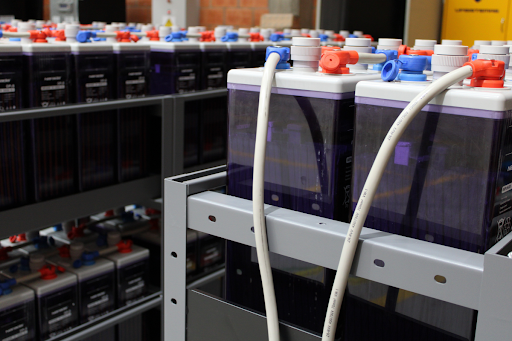
Designing for What Hasn’t Happened Yet: Why Overengineering Is the New Safety Standard
One of the most important shifts in battery packaging strategy is the move toward designing for unknown future conditions. Leading approaches now involve testing containment systems at 150 percent to 200 percent of the expected energy load. This introduces a critical safety margin that accounts for evolving battery technologies.
Organizations such as UL emphasize the importance of rigorous battery testing to validate performance under extreme and unexpected conditions, ensuring systems can withstand worst-case scenarios.
From our perspective, this is not excessive. It is necessary. Designing to current specifications alone creates a short lifecycle for containment systems as battery performance continues to evolve.
Consider a company deploying battery storage cabinets across multiple sites. If those systems are designed only for current battery specifications, they may require replacement or redesign within a few years. However, by engineering systems to handle significantly higher energy loads, the company can adopt new battery technologies without modifying its infrastructure.
This approach also reduces regulatory risk. As standards evolve, organizations with built-in safety margins are better positioned to maintain compliance without operational disruption. Companies that invest in engineered reusable battery packaging systems are not only improving safety, but also protecting long-term capital investments.
Stopping the Chain Reaction: How Advanced Materials and Modular Design Help Prevent Propagation
As battery systems become more complex, containment strategies must evolve to address propagation risk at multiple levels. Advanced materials and modular packaging systems are now essential for limiting the spread of thermal events and reducing overall system impact.
Research from the National Renewable Energy Laboratory (NREL) identifies controlling thermal runaway propagation through system-level design, such as thermal barriers and optimized cell spacing, as critical for preventing large-scale battery incidents. Findings emphasize that isolating initial cell failures is necessary to prevent cascading effects within energy storage systems.
In practice, this requires combining passive and active containment strategies. Advanced materials can absorb or suppress thermal energy, while modular designs isolate failures at the cell, module, or pack level. This layered approach ensures that a single failure does not escalate into a system-wide event.
For example, a facility storing large volumes of batteries implements modular battery storage cabinets with integrated containment materials. When a failure occurs within one module, the system prevents propagation to adjacent units. At the same time, the cabinet contains hazardous flames, gases, and particulates, preventing them from escaping into the surrounding environment.
This is where packaging transitions from passive protection to active risk mitigation. Companies that adopt these advanced systems are better equipped to manage both known and emerging failure modes.
From Compliance to Preparedness: Why Future-Proof Battery Storage Cabinets Are Now Essential
The rapid evolution of lithium-ion battery technology is redefining what safe containment requires. As energy densities increase and new chemistries emerge, the risks associated with battery systems are becoming more severe and less predictable. Organizations that rely on outdated containment strategies will face increasing exposure to safety incidents, regulatory challenges, and operational disruption.
The path forward requires a shift in mindset. Packaging and containment systems must be designed for uncertainty, not just compliance. This includes incorporating safety margins, leveraging advanced materials, and implementing modular designs that limit propagation and contain high-energy events.
Battery storage cabinets are no longer simple storage solutions. They are critical safety systems that protect people, infrastructure, and operations. Organizations that invest in engineered lithium-ion battery containment and transport solutions are positioning themselves to manage evolving risks while maintaining compliance and efficiency.
Designing for the unknown is not optional. It is essential for building resilient, future-ready battery operations in an increasingly complex risk environment.