
Article Summary
The 68th session of the UN Sub-Committee of Experts on the Transport of Dangerous Goods (SCOE) convened in Geneva, Switzerland, June 30 – July 8, 2026 — the third of four sessions in the 2025–2026 biennium. Delegates reviewed 46 working documents and 84 informal documents, with the most consequential developments centered on lithium and sodium battery regulation: a U.S. proposal to subdivide Class 9 into four divisions, including a dedicated subdivision for energy storage devices, and the most mature version yet of a decade-long hazard-based battery classification framework that would replace chemistry-based rules with test-based hazard categories (A through E). Neither proposal was decided at this session; both return, further developed, at the 69th session. The SCOE did adopt several other amendments — a performance-based exemption for small sealed articles containing reactive metals, a clarification of SP188 inner packaging requirements, new single-cell battery testing rules with a 50 Wh threshold, and new Class 9A placarding requirements for cargo transport units carrying lithium or sodium batteries — while also advancing lower-profile initiatives on consumer returns/e-commerce, hazard label harmonization, and voluntary e-labelling. The 69th and final session of the biennium is scheduled for November 23 – December 1, 2026, ahead of potential inclusion of adopted changes in the 25th revised edition of the UN Model Regulations.
Who This Is For
Dangerous goods classification specialists, regulatory affairs and compliance teams, battery and energy storage manufacturers, and packaging engineers responsible for lithium-ion, lithium metal, or sodium-ion battery shipments — anyone who needs to track UN Model Regulations changes before they land in the 25th revised edition rather than react to them after the fact.
Executive Summary of the 68th Session of the UN Sub-Committee of Experts on the Transport of Dangerous Goods
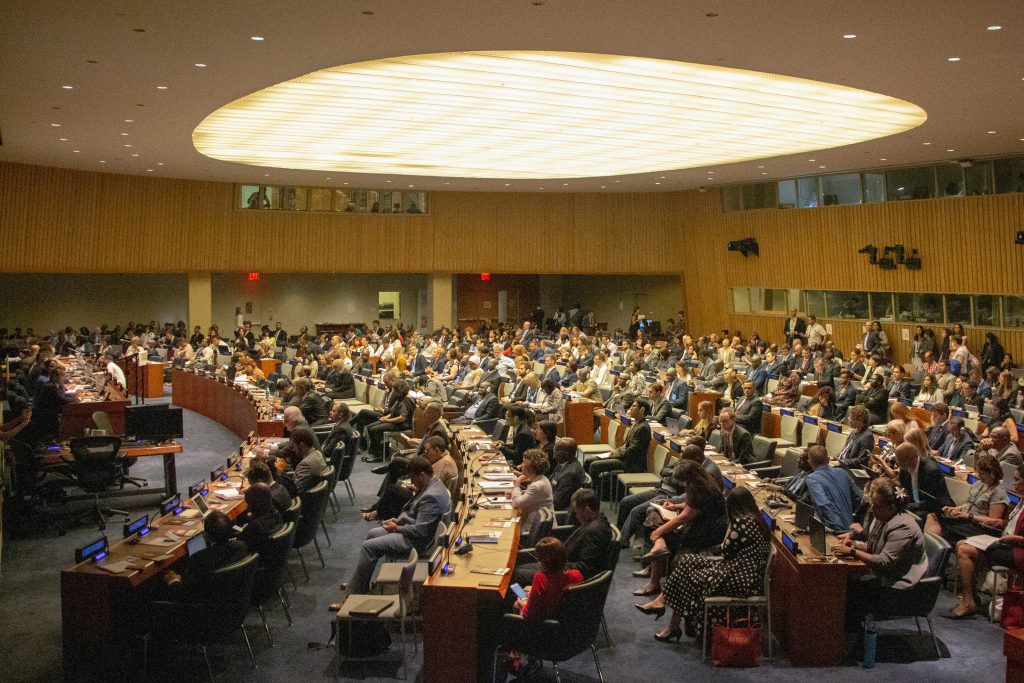
The 68th session of the United Nations Sub-Committee of Experts on the Transport of Dangerous Goods (SCOE) met in Geneva Switzerland from June 30 – July 8, 2026. The SCOE considered working documents 1-46 and informal documents 1-84. This was the third session of the current biennium. Changes to the UN Model Regulations agreed at this session will eventually be considered for adoption at the final session of the biennium (69th) scheduled for November 23 – December 1, 2026. If adopted, these amendments will be included in the 25th revised edition of the UN Model Regulations. The following summary highlights the most significant decisions from the 68th session and the more impactful on-going initiatives for the global transport of dangerous goods:
Class 9 Divisions
The U.S. proposed draft amendments to subdivide Class 9 into four divisions. This proposal builds from previous discussions from the last two sessions (UN/SCETDG/66/INF.31 and UN/SCETDG/67/INF.36) by proposing specific regulatory text for the SCOE to consider. While previous discussions resulted in general support for the approach, the SCOE had a number of concerns expressed at this session after review of the text. The plenary discussion led to a lunchtime working group led by the U.S. to discuss the proposal in more detail as follows:
- Class 9.1 – environmentally hazardous substances. While this division was generally acceptable in previous discussions, a concern was presented related to integrating the dead fish and tree pictogram into the Class 9 label. The SCOE discussed that this may provide some hazcom efficiency for Class 9 UN3077 and UN3088 by combining the environmentally hazardous substance mark and the Class 9 label; however, it might also cause confusion for substances that are classified in other than Class 9 (i.e. Class 3) but require a marine pollutant mark by other regulations such as the IMDG Code. With this new concern being expressed, some experts questioned the value in subdividing environmentally hazardous substances and suggested keeping these substances in the miscellaneous (proposed 9.4) division.
- Class 9.2 – lithium and sodium batteries. The strongest consensus reached during the discussion was the need for a dedicated Class 9 subdivision for lithium and sodium batteries and other energy storage devices. Delegates recognized that these articles present unique transport hazards and emergency response considerations that are not adequately reflected within today’s miscellaneous Class 9 framework. A dedicated subdivision would provide clearer hazard communication and create a foundation for transport provisions tailored specifically to energy storage devices. While there is broad agreement on the overall direction, experts also recognized that significant work remains to integrate the results of the ongoing hazard-based classification initiative.
- Class 9.3 – low hazard energetics. Consideration of a potential subdivision for low-hazard energetic articles continued to gain tempered support. Experts generally supported further development of the concept but expressed a view that objective, performance-based classification criteria must first be established before a new subdivision could be implemented. Delegates emphasized the need to maintain existing levels of transport safety while addressing what many described as a regulatory gap for modern articles that incorporate small quantities of energetic materials that do not function as an explosive. Discussion focused on the scope of a future classification system, including whether it should encompass specifically named Class 1.4S articles, articles that fail current exclusion criteria despite presenting minimal transport risk, or those currently assigned to Special Provision 280. While technical issues remain regarding terminology (whether the term should be low hazard or low risk), classification criteria (is the SP 280 criteria sufficient or some amendment to the exclusion criteria), and hazard communication (should the exploding bomb pictogram be integrated into the Class 9 label as it is not considered an explosive). The SCOE tasked the Energetics Working Group (EWG) to discuss possibilities for new criteria; however, the EWG was unable to progress the technical considerations without further input from the SCOE.
- Division 9.4 – Miscellaneous. This division would include everything else currently considered Class 9 and as such did not produce significant discussion.
No decisions were taken and the U.S. indicated they would submit another proposal to the next session based on the comments received.
Lithium and Sodium Battery Hazard-Based Classification
The UN Informal Working Group on Hazard-Based Classification presented the most mature version of its proposal to date after a decade of development. For the first time, the Working Group submitted a comprehensive package of draft amendments that included proposed changes to the UN Model Regulations, the Manual of Tests and Criteria, and the guiding principles supporting a new hazard-based framework for lithium-ion, lithium metal, and sodium-ion batteries. This latest proposal focused on four key areas:
- New Hazard Characterization Tests: The proposal introduces new hazard characterization tests that complement the existing UN 38.3 design qualification tests. While UN 38.3 confirms that a battery can withstand the normal conditions of transport, the proposed tests evaluate the severity of the hazards if thermal runaway occurs. The Working Group proposed new tests that examine thermal runaway propagation, heat release, flammable gas generation, and the influence of state of charge to better characterize transport risk. Thermal runaway propagation remains the most important consideration because it determines whether a single-cell failure remains localized or escalates into an event capable of involving an entire battery, package, or cargo load.
- Five Proposed Hazard Categories: The proposed framework classifies batteries into five transport hazard categories (Categories A through E) based on their measured behavior during testing rather than battery chemistry. The proposed testing protocols evaluate how the battery behaves during thermal runaway, including the extent of propagation, gas generation, heat release, and the effectiveness of engineering controls. The objective is to align regulatory requirements with demonstrated transport hazards while potentially incentivizing safer battery designs. Category E represents batteries that exhibit little or no meaningful transport hazard under the prescribed test conditions and could ultimately provide a pathway to significantly reduced regulatory requirements.
- New UN Numbers and Proper Shipping Names: The Working Group also proposed a new family of UN numbers and Proper Shipping Names organized around the hazard categories. Rather than relying on numerous special provisions and packing instructions to communicate transport hazards, the new approach would incorporate much of that information directly into or tied directly to the shipping description. During the session, delegates also considered whether state of charge should become part of the required hazard communication but concluded that it is better used as a classification parameter than as information required on shipping papers or package markings. While the Working Group agreed to 10-12 new UN#s, this discussion is still on-going as some delegates continue to express a preference for additional UN#’s with the view that will provide greater granularity for certain modes and/or risk management assessments. Recognizing that the testing protocols and transport provisions developed to date are applicable to standalone packaged cells and batteries, the group tentatively agreed to defer any changes to equipment containing lithium or sodium ion batteries until the next biennium.
- Transition to a New Framework: Recognizing the significant impact of these changes, the Working Group is proposing a lengthy transition period during which the existing classification system and the new hazard-based framework would operate in parallel. Such an approach would provide manufacturers, testing laboratories, carriers, and regulators sufficient time to implement the new test methods, update systems and training, and validate the consistency of the new classification methodology before fully replacing the existing framework. While the exact transition date is still to be discussed by the UNSCOE, one suggestion that seems to be a minimum consideration is 2032.
Although the technical details continue to evolve, the latest discussions at the 68th session and the following Working Group demonstrates that hazard-based battery classification has moved beyond the conceptual stage. The Working Group is now developing specific regulatory text, test methods, hazard categories, and transition provisions with the goal of presenting a comprehensive proposal for consideration at the 69th session.
Consumer Returns and E-Commerce
The SCOE continues to consider the challenges with the growth of e-commerce and direct to consumer sales. While there have been many discussions and solutions considered within national and regional regulations, a globally consistent solution is critical for global distribution entities. Rather than attempting to address e-commerce and/or reverse logistics in its totality, this proposal sought to address a specific impediment to development and implementation of responsible Return Merchandise Authorization programs. That is, recognizing that consumers in this merchandise return model should not be expected to meet the full dangerous goods training requirements as a traditional consigner. The document was further discussed within a lunchtime working group led by the experts from COSTHA. The working group agreed that consumers should not be considered a traditional consignor and thus should not require detailed dangerous goods training with corresponding training record maintenance. Rather than expecting consumers to classify dangerous goods, select compliant packaging, prepare shipping documentation, or understand modal transport requirements, the entity that establishes the return program is best positioned to provide this function for the return shipment. COSTHA agreed to seek comments inter-sessionally and return with another proposal to the next session.
Classification of Small Sealed Articles Containing Reactive Metals
The SCOE adopted a new special provision for certain articles assigned to UN 3543, Articles containing a substance which, in contact with water, emits flammable gases, N.O.S. Rather than creating a narrowly focused exception for melt pressure sensors or engine valves as originally proposed, the adopted approach establishes performance-based criteria that can be applied to a broader range of sealed articles containing very small quantities of reactive metals or metal alloys. The new special provision exempts qualifying articles from most provisions of the Model Regulations when they meet specified limits on hazardous material content, are manufactured under a quality management system, and demonstrate robust design and packaging capable of preventing leakage under normal transport conditions. By adopting a generic, performance-based provision, the SCOE created a regulatory option that can accommodate future technologies and similar industrial applications without requiring new UN entries or special provisions for each individual product.
Clarification of the SP188 Inner Packaging Requirement
The SCOE agreed to a clarification of the inner packaging requirements applicable under Special Provision 188. The discussion addressed inconsistent interpretations among competent authorities regarding whether each individual cell or battery required its own inner packaging (such as a common plastic bag) or whether more innovative packaging designs (such as trays) could be used to separate and protect multiple cells and batteries inside the package. The adopted clarification confirms that the intent of SP188 is to ensure adequate protection against short circuits and damage, rather than prescribing a single packaging configuration. This clarification should improve international consistency and reduce unnecessary packaging costs while maintaining safety.
Revisions for Single-Cell Batteries
The SCOE adopted amendments to clarify the regulatory treatment of single cell batteries. The amendments establish that a cell fitted with components necessary for use, such as a case, terminals, protective devices, or battery management system connections, is considered a single cell battery and is to be tested in accordance with the requirements applicable to single cell batteries under the UN Manual of Tests and Criteria. SP188 was amended to introduce provisions for single cell batteries and establish a limit for lithium-ion and sodium-ion single cell batteries of 50 Wh under the provisions of SP188. These changes provide greater regulatory certainty to accommodate the increasing use of single cell battery designs.
Black Hatching Option for the Battery Mark
The SCOE considered a proposal to permit the hatching on the lithium and sodium battery mark to be either red or black, providing greater flexibility for package marking. The change is intended to facilitate the use of monochrome print-on-demand systems, reduce printing costs, and simplify logistics without affecting the safety function of the mark. While some experts expressed concern that red hatching provides greater visibility, particularly in air transport, the SCOE noted that individual transport modes could retain more restrictive requirements if needed. The adopted text remains in square brackets pending final confirmation at the December 2026 session.
Class 9A Placards for Cargo Transport Units Containing Lithium Batteries
The SCOE adopted a proposal to require Class 9A placards for cargo transport units assigned to UN 3536, UN 3563, and UN 3564, recognizing that the primary hazard of these entries is the lithium-ion, lithium metal, or sodium-ion batteries installed within the unit. The change aligns the exterior placarding with the battery-specific hazard communication label used for other lithium and sodium battery entries, providing more specific information for transport personnel and emergency responders.
Hazard Label Dimensions and Orientation
The SCOE discussed a proposal to harmonize hazard label requirements by permitting reduced-size labels and allowing standard hazard labels to be displayed as either the traditional diamond or a horizontal square on packages with limited surface area. While many experts supported the objective of improving multimodal harmonization and reducing the need for multiple labels, opinions remained divided on whether the diamond orientation is an essential element of hazard communication. Several delegations requested further refinement of the proposed criteria for alternative label sizes and orientations. In light of the differing views, COSTHA withdrew the proposal and indicated it would continue discussions with interested delegations before submitting a revised proposal at a future session.
E-Labelling for Dangerous Goods
The SCOE expressed broad support for continued development of e-labelling as a voluntary, complementary tool for communicating dangerous goods information. Recognizing the potential to improve hazard communication, regulatory compliance, supply chain efficiency, and access to safety information, the SCOE endorsed the roadmap presented by COSTHA to develop guidance on the use of QR codes and other digital technologies linked to dangerous goods packages. The SCOE also supported the establishment of an informal working group, led by COSTHA, to define the scope of future work and develop recommendations for consideration at the sixty-ninth session. In addition, the SCOE noted the proposal to include e-labelling as a dedicated work item in its 2027–2028 programme of work to consider integration of digital hazard communication into the UN Model Regulations while preserving existing physical marking and labeling requirements.
The fourth and final session of the 2025-2026 UN Sub-Committee biennium is scheduled for November 23 – December 1, 2026.
FAQ Section
What happened at the 68th session of the UN Sub-Committee on the Transport of Dangerous Goods? Delegates met in Geneva, Switzerland, June 30 – July 8, 2026, and considered 46 working documents and 84 informal documents. No final decisions were reached on the two highest-profile proposals — subdividing Class 9 and hazard-based battery classification — but the SCOE adopted several other amendments, including single-cell battery testing rules, an SP188 clarification, and new placarding requirements for lithium and sodium battery cargo transport units.
What is the U.S. proposal to subdivide Class 9? The U.S. proposed splitting Class 9 into four divisions: 9.1 (environmentally hazardous substances), 9.2 (lithium and sodium batteries), 9.3 (low-hazard energetics), and 9.4 (miscellaneous). The SCOE raised concerns during this session and took no decision; the U.S. plans to submit a revised proposal at the 69th session.
What is hazard-based battery classification, and how would it change battery shipping rules? It’s a proposed framework that would classify lithium-ion, lithium metal, and sodium-ion batteries into five hazard categories (A–E) based on how they actually behave during new thermal-runaway hazard characterization tests, rather than by chemistry alone. It would introduce new UN numbers, proper shipping names, and a lengthy transition period — one proposal floated a minimum 2032 transition date.
What amendments did the SCOE actually adopt at the 68th session? The SCOE adopted a new special provision for small sealed articles containing reactive metals, a clarification of SP188 inner packaging requirements, amendments defining single-cell battery testing (with a 50 Wh limit under SP188), and new Class 9A placarding requirements for cargo transport units under UN 3536, UN 3563, and UN 3564.
When is the next UN Sub-Committee session, and what happens to these proposals? The 69th session — the fourth and final session of the 2025–2026 biennium — is scheduled for November 23 – December 1, 2026. Amendments agreed there would be considered for inclusion in the 25th revised edition of the UN Model Regulations.
By Duane Pfund